Robotic vs Open Urology Surgery: Which One Is Better for Patients?
Urology has seen a major transformation over the last two decades. Procedures that once required large incisions and long hospital stays are now increasingly performed using minimally invasive and robotic techniques. One of the most common questions patients ask today is: Robotic surgery or open surgery – which is better?
According to Dr. Zaheen Khan, Urologist & Robotic Surgeon, the answer depends on the disease, patient condition, and surgical expertise, but in many modern urological conditions, robotic surgery offers clear advantages for patients.
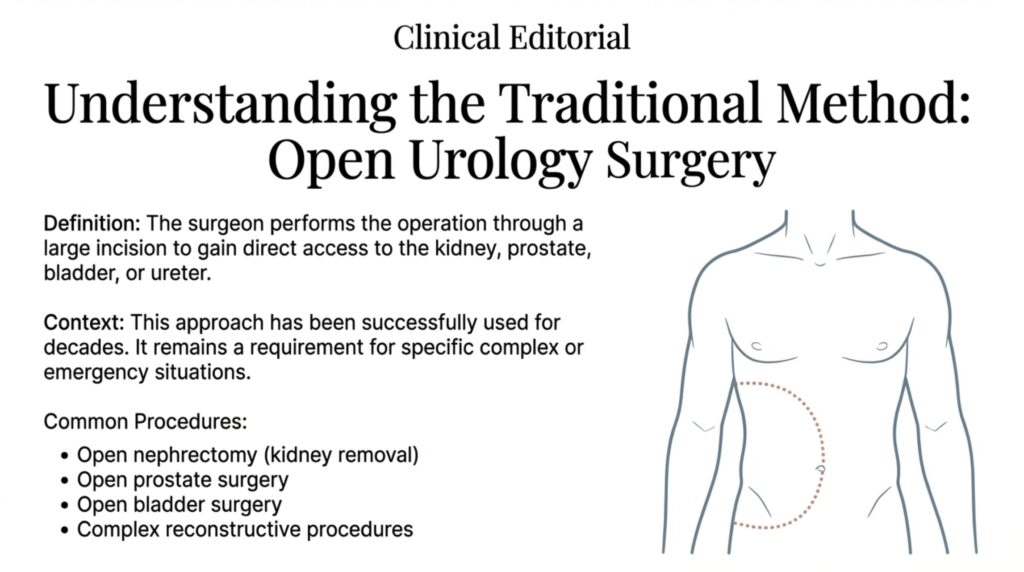
Understanding Open Urology Surgery
Open urology surgery is the traditional method where the surgeon performs the operation through a large incision to directly access the kidney, prostate, bladder, or ureter. This approach has been used successfully for decades and is still required in selected complex or emergency situations.
Common open urology surgeries include:
Open nephrectomy (kidney removal)
Open prostate surgery
Open bladder surgery
Complex reconstructive procedures
Limitations of open surgery
While effective, open surgery is associated with:
Larger surgical cuts
More blood loss
Increased postoperative pain
Longer hospital stay
Slower recovery and delayed return to normal activities
For many patients, these factors significantly affect quality of life during recovery.
What Is Robotic Urology Surgery?
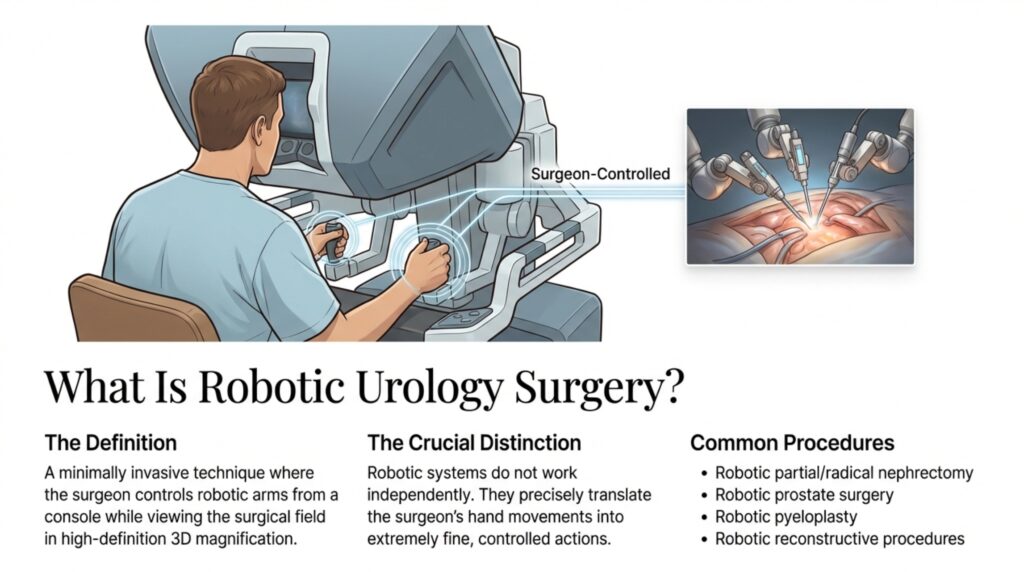
Robotic urology surgery is a minimally invasive technique performed using a robotic surgical system. The surgeon controls robotic arms from a console, while viewing the surgical field in high-definition 3D magnification.
Robotic systems do not work independently — they precisely translate the surgeon’s hand movements into extremely fine, controlled actions.
Robotic surgery provides a magnified 3D view and wrist-like instrument movement, allowing precise dissection around delicate structures such as blood vessels, nerves, and urinary tract tissues.
Open surgery relies on direct vision, which is effective but lacks the magnification and fine control offered by robotic systems.
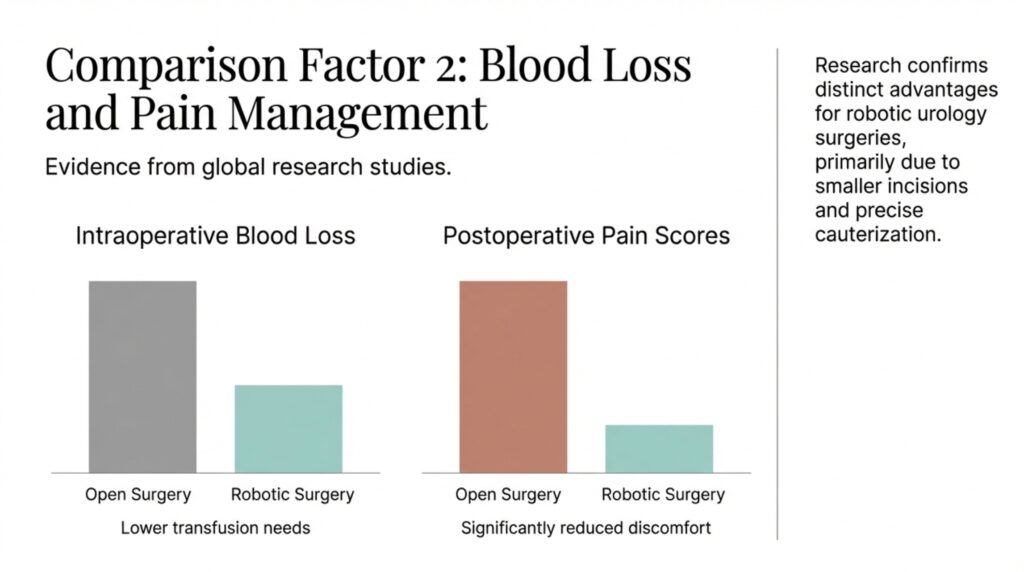
2️⃣ Blood Loss and Pain
Multiple global research studies have shown that robotic urology surgeries are associated with:
Less blood loss
Lower need for blood transfusion
Reduced postoperative pain
Open surgery generally involves higher blood loss and more postoperative discomfort due to larger incisions.
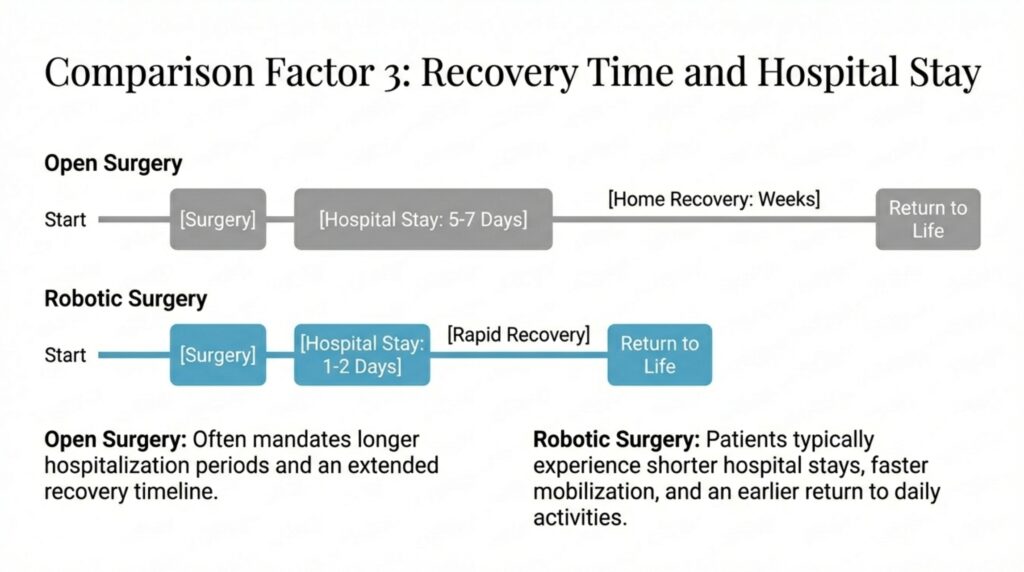
3️⃣ Recovery and Hospital Stay
Patients undergoing robotic surgery usually experience:
Shorter hospital stay
Faster mobilization
Earlier return to daily activities
Open surgery often requires longer hospitalization and extended recovery time.
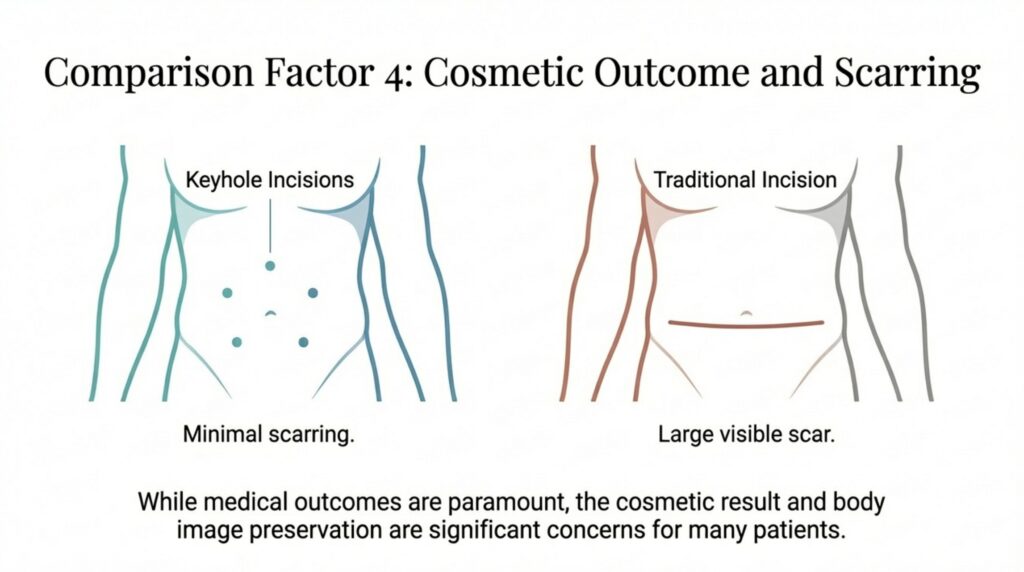
4️⃣ Cosmetic Outcome
Robotic surgery uses small keyhole incisions, resulting in minimal scarring. Open surgery leaves a large visible scar, which can be a concern for many patients.
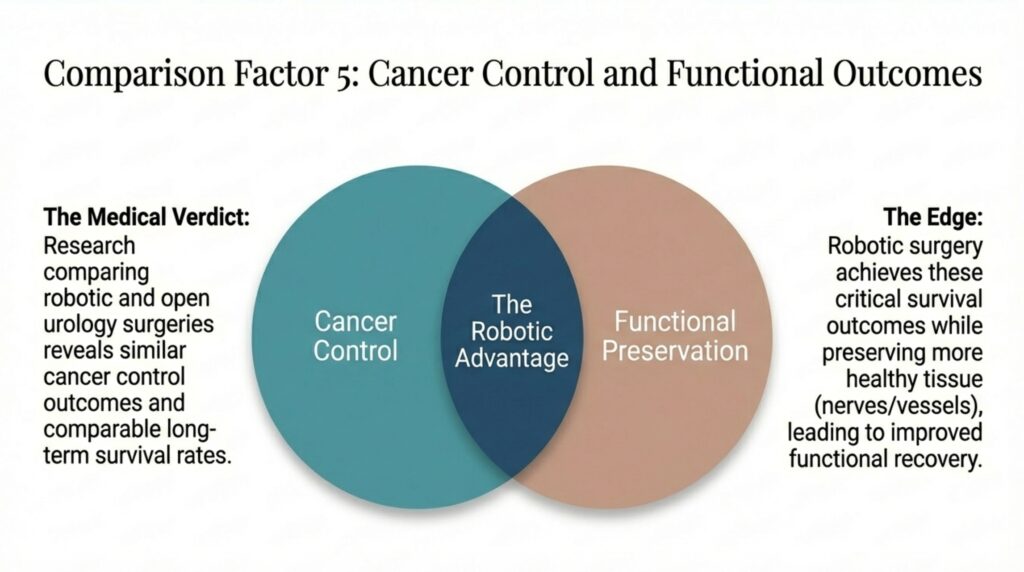
5️⃣ Cancer Control and Surgical Outcomes
Research comparing robotic and open urology surgeries has shown:
Similar cancer control outcomes in properly selected cases
Comparable long-term survival rates
Robotic surgery achieves these outcomes while preserving more healthy tissue and improving functional recovery.
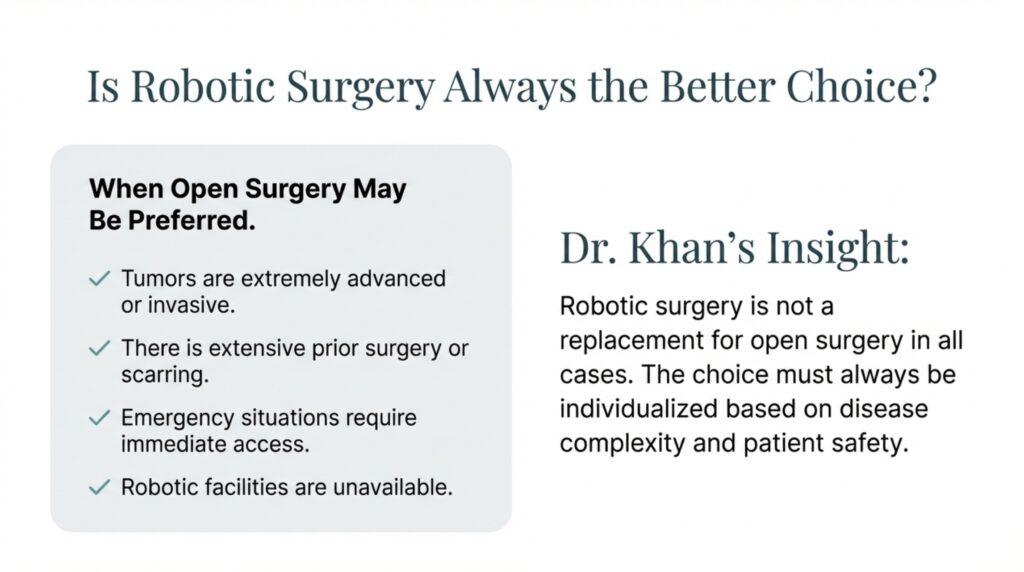
Is Robotic Surgery Always Better?
Dr. Zaheen Khan emphasizes that robotic surgery is not a replacement for open surgery in all cases.
Open surgery may still be preferred when:
Tumors are extremely advanced or invasive
There is extensive prior surgery or scarring
Emergency situations require immediate access
Robotic facilities are not available
The choice of surgery must always be individualized.
Importance of Surgeon Experience
One of the most important factors influencing outcomes is surgeon expertise. Studies across the world consistently show that:
Robotic surgery outcomes improve significantly with surgeon experience
High-volume centers have lower complication rates
Whether robotic or open, the skill and judgment of the urologist play a crucial role in patient safety and success.
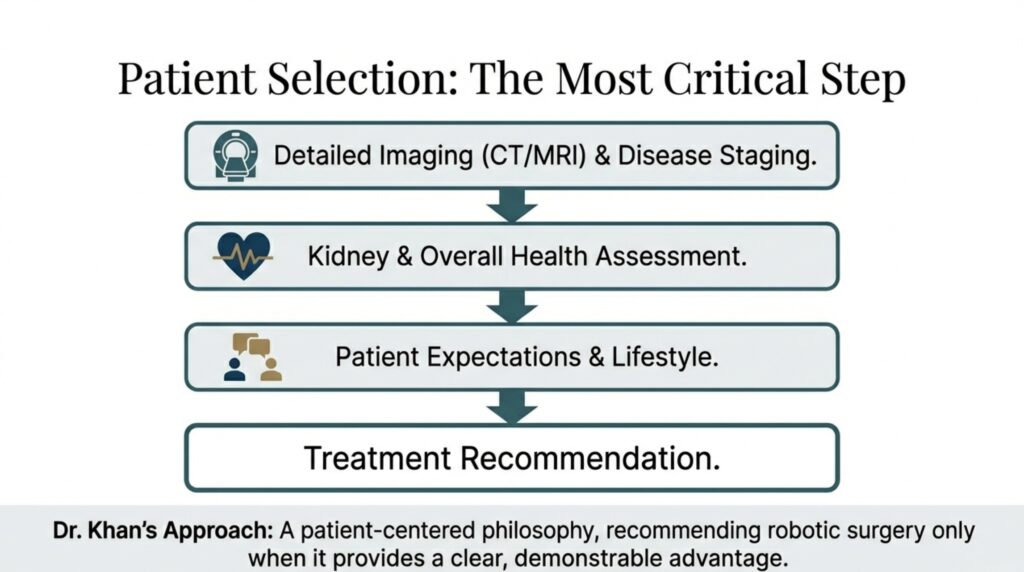
Patient Selection: The Most Critical Step
Not every patient is a candidate for robotic surgery. Proper evaluation includes:
Detailed imaging (CT/MRI)
Kidney and overall health assessment
Disease stage and complexity
Patient expectations and lifestyle
Dr. Zaheen Khan follows a patient-centered approach, recommending robotic surgery only when it provides a clear advantage.
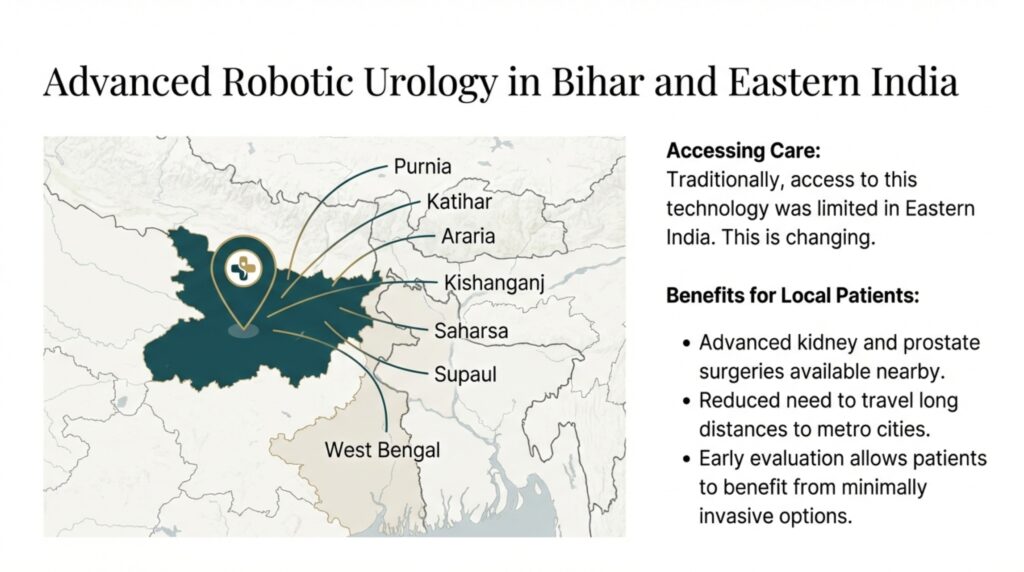
Robotic Urology Surgery in Bihar and Eastern India
Access to advanced robotic urology has traditionally been limited in many parts of eastern India. However, patients from Purnia, Katihar, Araria, Kishanganj, Saharsa, Supaul, other districts of Bihar, and neighboring West Bengal are increasingly seeking robotic urology care.
Robotic urology offers patients in this region:
Advanced kidney and prostate surgeries
Faster recovery with fewer complications
Reduced need to travel long distances
Early evaluation allows patients to benefit from minimally invasive options when suitable.
Final Thoughts
Robotic urology surgery represents a significant advancement in the treatment of kidney, prostate, and urinary tract diseases. Compared to open surgery, it offers:
Less pain
Faster recovery
Better precision
Improved patient comfort
However, the right surgery depends on the right patient, right disease, and right surgeon. A thorough evaluation and honest discussion of options remain essential.
Dr. Zaheen Khan is aUrologist & Robotic Surgeon with experience in advanced urology procedures, including robotic kidney and prostate surgeries. His approach focuses on evidence-based treatment, patient safety, and long-term functional outcomes.