• +91 7250317972

  • Purnia, Bihar

  • 24 Hrs

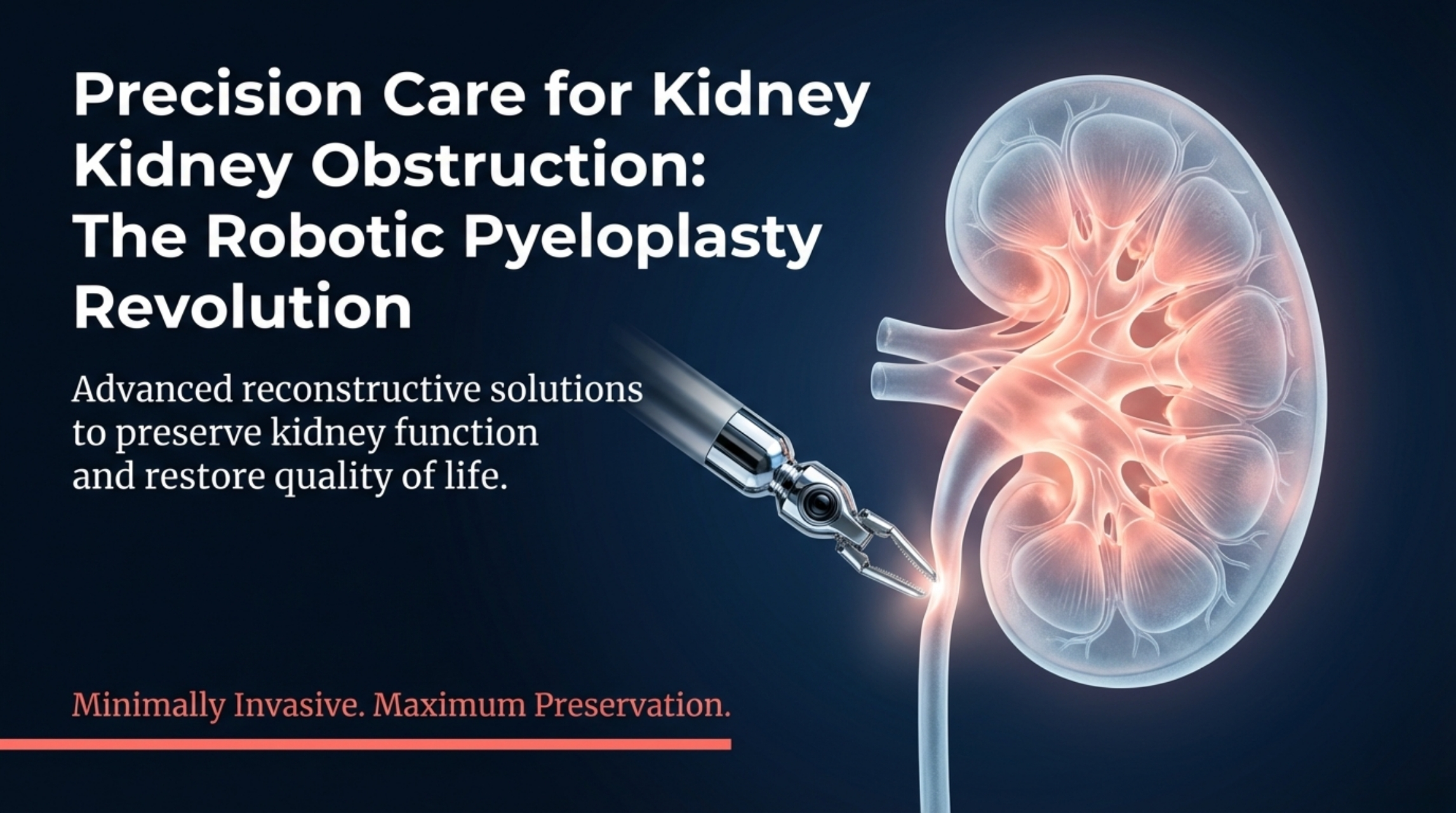
Ureteropelvic Junction (PUJ) obstruction is a condition in which the flow of urine from the kidney to the ureter becomes blocked. This blockage causes urine to accumulate inside the kidney, leading to swelling (hydronephrosis), pain, repeated infections, and gradual kidney damage. Traditionally, PUJ obstruction required open surgery with large incisions and long recovery. Today, robotic surgery has transformed its treatment. According to Dr. Zaheen Khan, Urologist & Robotic Surgeon, robotic pyeloplasty offers a precise and minimally invasive solution that preserves kidney function and allows patients to recover faster with less discomfort.

Robotic Pyeloplasty for PUJ Obstruction: Kidney-Saving Surgery Explained: Dr. Zaheen Khan, Urologist and Robotic Surgeon

Ureteropelvic Junction (PUJ) obstruction is a condition in which the flow of urine from the kidney to the ureter becomes blocked. This blockage causes urine to accumulate inside the kidney, leading to swelling (hydronephrosis), pain, repeated infections, and gradual kidney damage.

Traditionally, PUJ obstruction required open surgery with large incisions and long recovery. Today, robotic surgery has transformed its treatment.

According to Dr. Zaheen Khan, Urologist & Robotic Surgeon, robotic pyeloplasty offers a precise and minimally invasive solution that preserves kidney function and allows patients to recover faster with less discomfort.

What Is PUJ Obstruction?

The ureteropelvic junction is the point where the kidney connects to the ureter. When this junction becomes narrow or blocked, urine cannot drain properly.

Common symptoms include:

Flank or side pain (especially after drinking water)

Recurrent urinary infections

Kidney swelling seen on ultrasound

Vomiting in children

Stones due to urine stagnation

If untreated, long-standing obstruction can slowly damage the kidney.

Ureteropelvic Junction (PUJ) obstruction is a condition in which the flow of urine from the kidney to the ureter becomes blocked. This blockage causes urine to accumulate inside the kidney, leading to swelling (hydronephrosis), pain, repeated infections, and gradual kidney damage. Traditionally, PUJ obstruction required open surgery with large incisions and long recovery. Today, robotic surgery has transformed its treatment. According to Dr. Zaheen Khan, Urologist & Robotic Surgeon, robotic pyeloplasty offers a precise and minimally invasive solution that preserves kidney function and allows patients to recover faster with less discomfort.

Why Treatment Is Necessary?

Many patients ignore intermittent pain for years. Over time, pressure builds inside the kidney and begins to destroy functional tissue.

Early correction helps:

Relieve pain

Prevent infections

Stop stone formation

Preserve kidney function

Dr. Zaheen Khan emphasizes that timely surgery prevents permanent kidney loss.

Ureteropelvic Junction (PUJ) obstruction is a condition in which the flow of urine from the kidney to the ureter becomes blocked. This blockage causes urine to accumulate inside the kidney, leading to swelling (hydronephrosis), pain, repeated infections, and gradual kidney damage. Traditionally, PUJ obstruction required open surgery with large incisions and long recovery. Today, robotic surgery has transformed its treatment. According to Dr. Zaheen Khan, Urologist & Robotic Surgeon, robotic pyeloplasty offers a precise and minimally invasive solution that preserves kidney function and allows patients to recover faster with less discomfort.

What Is Robotic Pyeloplasty?

Robotic pyeloplasty is a minimally invasive reconstructive surgery used to remove the blocked segment and reconnect the healthy ureter to the kidney.

The robotic system provides:

3D high-definition magnified vision

Fine wrist-like instrument movement

Accurate suturing in deep areas

This makes it ideal for delicate reconstruction of the urinary tract.

Ureteropelvic Junction (PUJ) obstruction is a condition in which the flow of urine from the kidney to the ureter becomes blocked. This blockage causes urine to accumulate inside the kidney, leading to swelling (hydronephrosis), pain, repeated infections, and gradual kidney damage. Traditionally, PUJ obstruction required open surgery with large incisions and long recovery. Today, robotic surgery has transformed its treatment. According to Dr. Zaheen Khan, Urologist & Robotic Surgeon, robotic pyeloplasty offers a precise and minimally invasive solution that preserves kidney function and allows patients to recover faster with less discomfort.

How the Surgery Is Performed?

The procedure is done under general anesthesia through small keyhole incisions.

Steps include:

The obstructed segment is identified

The narrowed portion is removed

The ureter is reattached to the kidney in a wider manner

A temporary stent is placed to help healing

Because the reconstruction requires extremely fine suturing, robotic assistance significantly improves precision.

Ureteropelvic Junction (PUJ) obstruction is a condition in which the flow of urine from the kidney to the ureter becomes blocked. This blockage causes urine to accumulate inside the kidney, leading to swelling (hydronephrosis), pain, repeated infections, and gradual kidney damage. Traditionally, PUJ obstruction required open surgery with large incisions and long recovery. Today, robotic surgery has transformed its treatment. According to Dr. Zaheen Khan, Urologist & Robotic Surgeon, robotic pyeloplasty offers a precise and minimally invasive solution that preserves kidney function and allows patients to recover faster with less discomfort.

Advantages of Robotic Pyeloplasty

Compared to open surgery, robotic pyeloplasty offers:

Less Pain

Small incisions reduce muscle injury and postoperative discomfort.

Faster Recovery

Most patients return home within 1–3 days.

Better Cosmetic Results

Minimal scarring compared to open surgery.

High Success Rate

Studies across urology centers show success rates above 90–95%.

Kidney Preservation

Early relief of obstruction prevents long-term kidney damage.

Dr. Zaheen Khan prefers robotic reconstruction whenever feasible because it combines surgical accuracy with patient comfort.

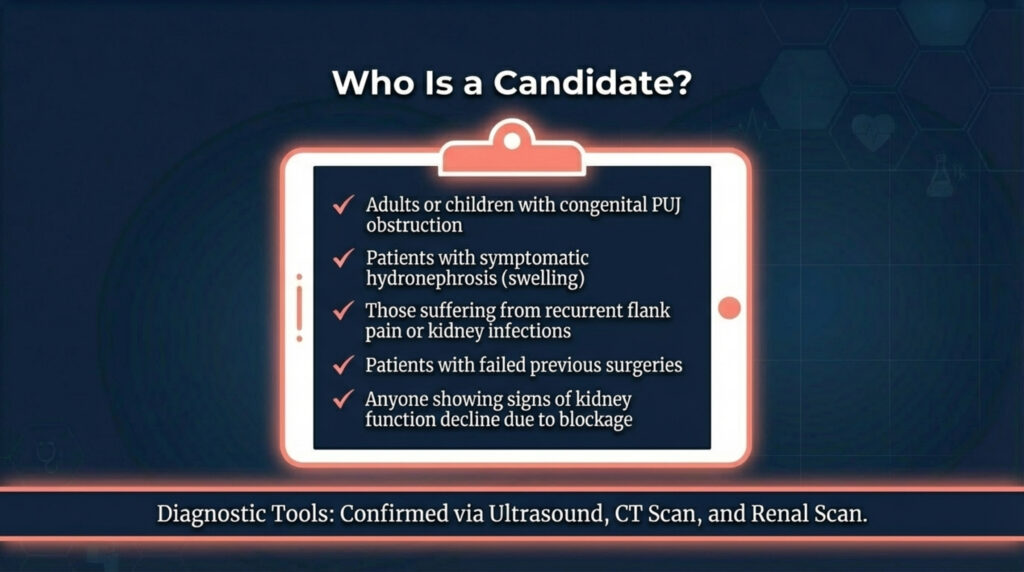
Who Is a Candidate for Robotic Pyeloplasty?

Robotic pyeloplasty is recommended for:

Congenital PUJ obstruction in adults or children

Symptomatic hydronephrosis

Recurrent flank pain

Recurrent kidney infections

Failed previous surgery

Obstruction causing kidney function decline

Proper evaluation with ultrasound, CT scan, and renal scan helps determine suitability.

Ureteropelvic Junction (PUJ) obstruction is a condition in which the flow of urine from the kidney to the ureter becomes blocked. This blockage causes urine to accumulate inside the kidney, leading to swelling (hydronephrosis), pain, repeated infections, and gradual kidney damage. Traditionally, PUJ obstruction required open surgery with large incisions and long recovery. Today, robotic surgery has transformed its treatment. According to Dr. Zaheen Khan, Urologist & Robotic Surgeon, robotic pyeloplasty offers a precise and minimally invasive solution that preserves kidney function and allows patients to recover faster with less discomfort.

Recovery After Surgery

After robotic pyeloplasty:

Walking begins within hours

Oral diet resumes next day

Mild discomfort lasts few days

Stent removed after 3–4 weeks

Most patients return to normal routine within 10–14 days.

Kidney swelling gradually decreases over months as drainage improves.

Ureteropelvic Junction (PUJ) obstruction is a condition in which the flow of urine from the kidney to the ureter becomes blocked. This blockage causes urine to accumulate inside the kidney, leading to swelling (hydronephrosis), pain, repeated infections, and gradual kidney damage. Traditionally, PUJ obstruction required open surgery with large incisions and long recovery. Today, robotic surgery has transformed its treatment. According to Dr. Zaheen Khan, Urologist & Robotic Surgeon, robotic pyeloplasty offers a precise and minimally invasive solution that preserves kidney function and allows patients to recover faster with less discomfort.

Importance of Early Diagnosis

Many patients from eastern India live with flank pain for years assuming it is due to stones or gastritis. Delayed treatment can permanently reduce kidney function.

Early evaluation by a urologist allows kidney-saving correction before irreversible damage occurs.

Robotic Pyeloplasty in Purnia and Nearby Districts

Patients from Purnia, Katihar, Araria, Kishanganj, Saharsa, Supaul, other districts of Bihar, and nearby West Bengal regions now have access to advanced reconstructive urology.

Dr. Zaheen Khan provides modern robotic treatment for PUJ obstruction, reducing the need to travel to distant metro cities for specialized surgery.

People searching for:

PUJ obstruction treatment near me

best urologist in Purnia

robotic kidney surgery in Bihar

can seek consultation for proper evaluation and management.

Ureteropelvic Junction (PUJ) obstruction is a condition in which the flow of urine from the kidney to the ureter becomes blocked. This blockage causes urine to accumulate inside the kidney, leading to swelling (hydronephrosis), pain, repeated infections, and gradual kidney damage. Traditionally, PUJ obstruction required open surgery with large incisions and long recovery. Today, robotic surgery has transformed its treatment. According to Dr. Zaheen Khan, Urologist & Robotic Surgeon, robotic pyeloplasty offers a precise and minimally invasive solution that preserves kidney function and allows patients to recover faster with less discomfort.

Conclusion

Robotic pyeloplasty is a highly effective and minimally invasive treatment for PUJ obstruction. It relieves symptoms, prevents infections, and protects kidney function with excellent long-term success.

With advancements in robotic urology, patients can now undergo precise reconstructive surgery with faster recovery and minimal discomfort.

Under the care of experienced specialists like Dr. Zaheen Khan, patients receive both advanced technology and careful follow-up — essential for durable results.
Ureteropelvic Junction (PUJ) obstruction is a condition in which the flow of urine from the kidney to the ureter becomes blocked. This blockage causes urine to accumulate inside the kidney, leading to swelling (hydronephrosis), pain, repeated infections, and gradual kidney damage. Traditionally, PUJ obstruction required open surgery with large incisions and long recovery. Today, robotic surgery has transformed its treatment. According to Dr. Zaheen Khan, Urologist & Robotic Surgeon, robotic pyeloplasty offers a precise and minimally invasive solution that preserves kidney function and allows patients to recover faster with less discomfort.