• +91 7250317972

  • Purnia, Bihar

  • 24 Hrs

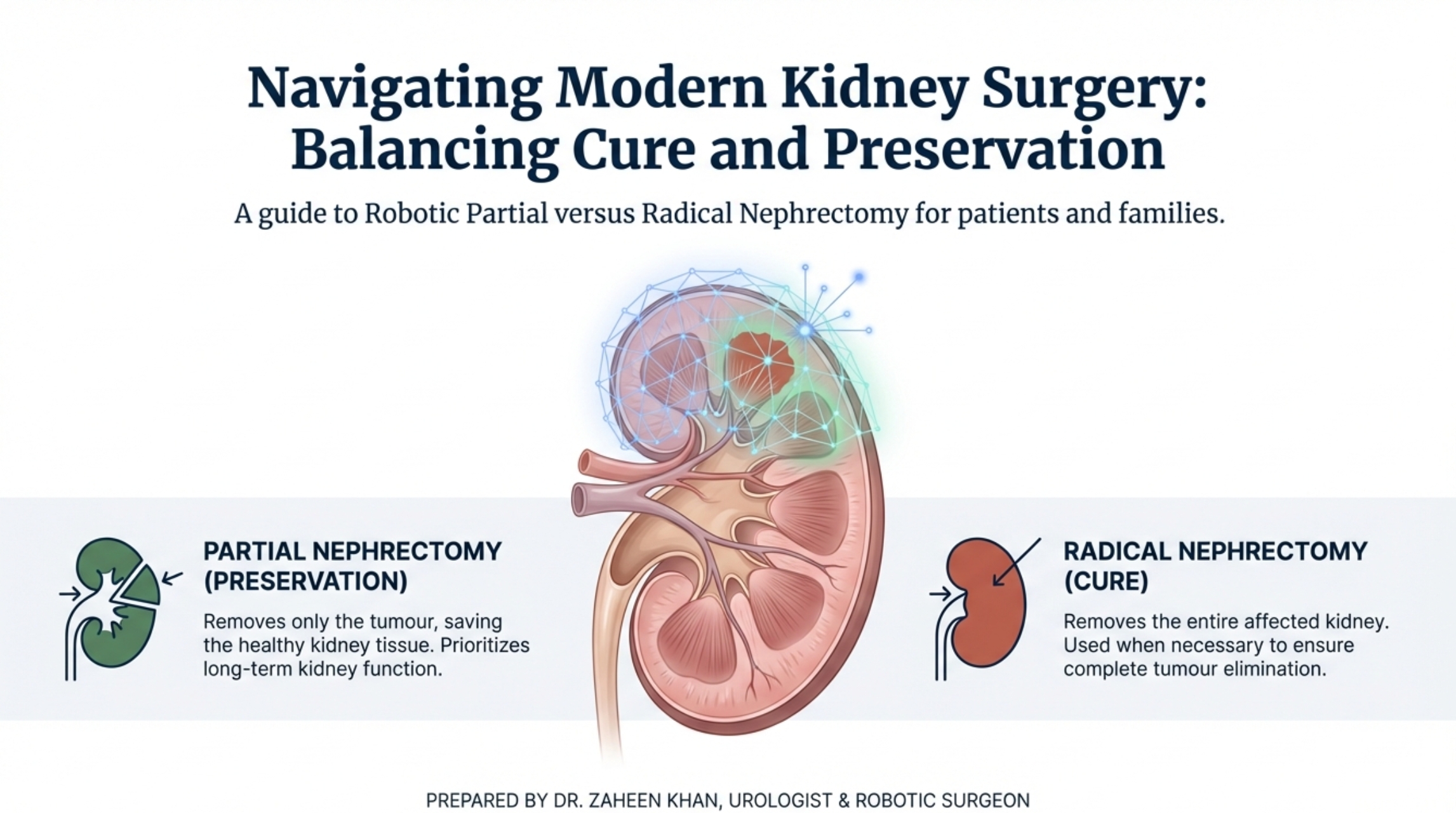
Robotic partial nephrectomy and radical nephrectomy are both important kidney cancer surgeries. The key difference is: Partial nephrectomy saves the kidney Radical nephrectomy removes the kidney when necessary Modern robotic surgery has made kidney-sparing treatment safer, more precise, and widely preferred for many patients with early kidney tumors. The best approach depends on careful imaging, expert surgical judgment, and individualized patient care.
Robotic Partial Nephrectomy vs Radical Nephrectomy: Which Kidney Surgery Is Better? Dr. Zaheen Khan, Urologist and Robotic Surgeon

When a kidney tumor is detected, one of the most important decisions is choosing the right surgical treatment. Patients often hear two major surgical options:

Partial Nephrectomy (kidney-sparing surgery)

Radical Nephrectomy (complete kidney removal)

With modern advancements, many of these procedures can now be performed using robotic technology, offering better precision and faster recovery.

According to Dr. Zaheen Khan, Urologist & Robotic Surgeon, the choice between robotic partial nephrectomy and radical nephrectomy depends on tumor size, location, kidney function, and overall patient health. This article explains the differences clearly for patients and families.

Robotic partial nephrectomy and radical nephrectomy are both important kidney cancer surgeries. The key difference is: Partial nephrectomy saves the kidney Radical nephrectomy removes the kidney when necessary Modern robotic surgery has made kidney-sparing treatment safer, more precise, and widely preferred for many patients with early kidney tumors. The best approach depends on careful imaging, expert surgical judgment, and individualized patient care.
Understanding Kidney Tumor Surgery

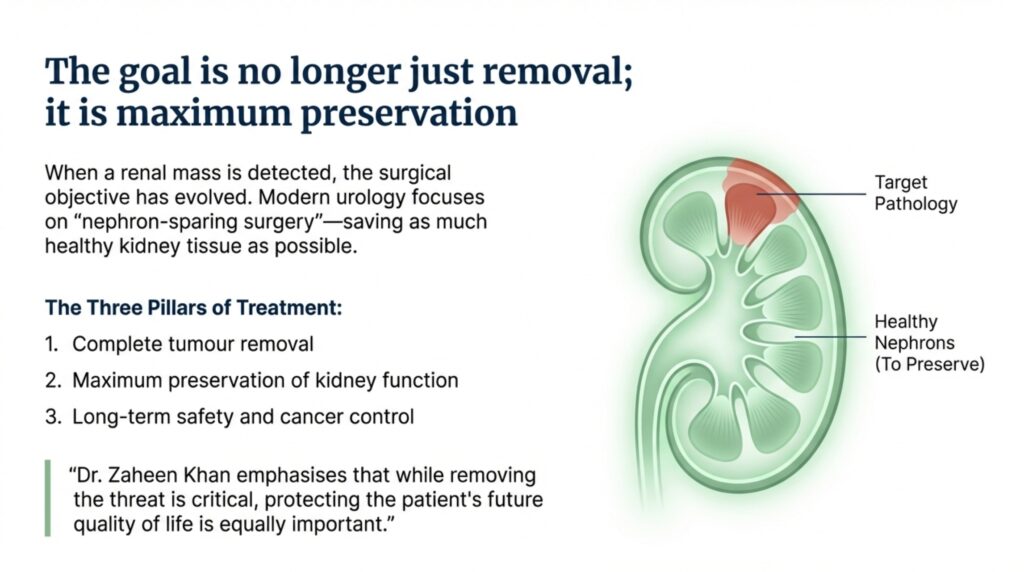
Kidney tumors, also known as renal masses, may be benign or cancerous. When surgery is required, the goal is always:

Complete tumor removal

Maximum preservation of kidney function

Long-term safety and cancer control

Modern urology focuses on nephron-sparing surgery whenever possible, meaning saving as much healthy kidney tissue as possible.

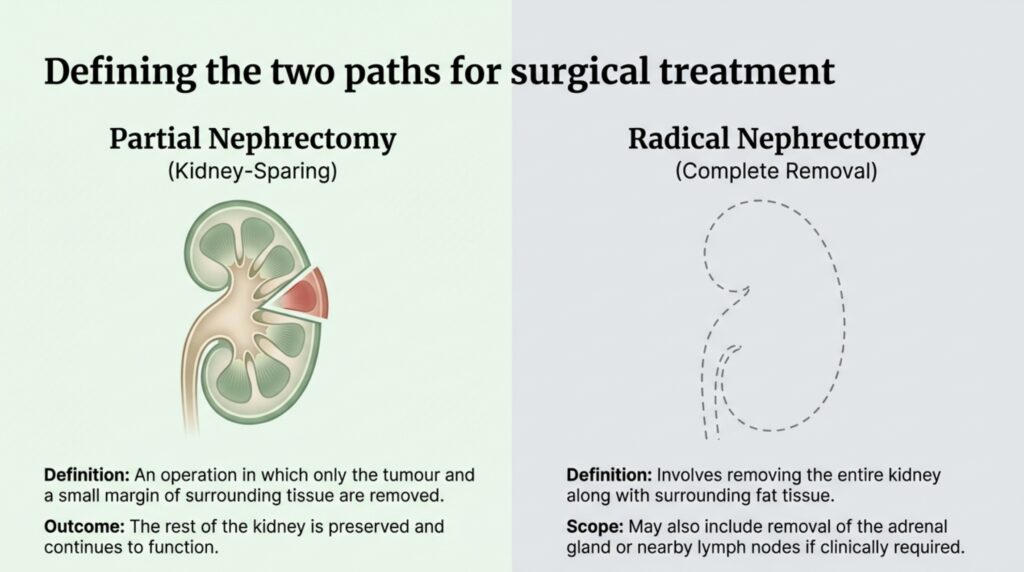
A robotic partial nephrectomy is a kidney-sparing operation in which only the tumor and a small margin of surrounding tissue are removed, while the rest of the kidney is preserved.

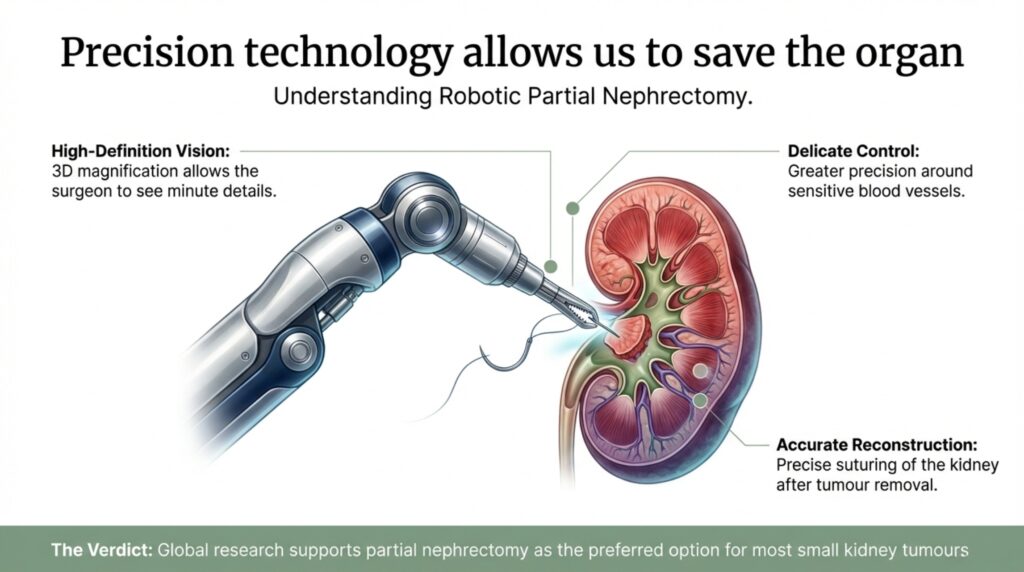
Robotic assistance allows the surgeon to operate with:

High-definition 3D magnification

Greater precision

Better control around delicate blood vessels

Accurate kidney reconstruction after tumor removal

Key benefits of partial nephrectomy:

Preserves kidney function

Reduces long-term risk of chronic kidney disease

Offers excellent cancer control in selected cases

Global research and international guidelines support partial nephrectomy as the preferred option for most small kidney tumors when technically feasible.

Robotic partial nephrectomy and radical nephrectomy are both important kidney cancer surgeries. The key difference is: Partial nephrectomy saves the kidney Radical nephrectomy removes the kidney when necessary Modern robotic surgery has made kidney-sparing treatment safer, more precise, and widely preferred for many patients with early kidney tumors. The best approach depends on careful imaging, expert surgical judgment, and individualized patient care.
What Is Radical Nephrectomy?

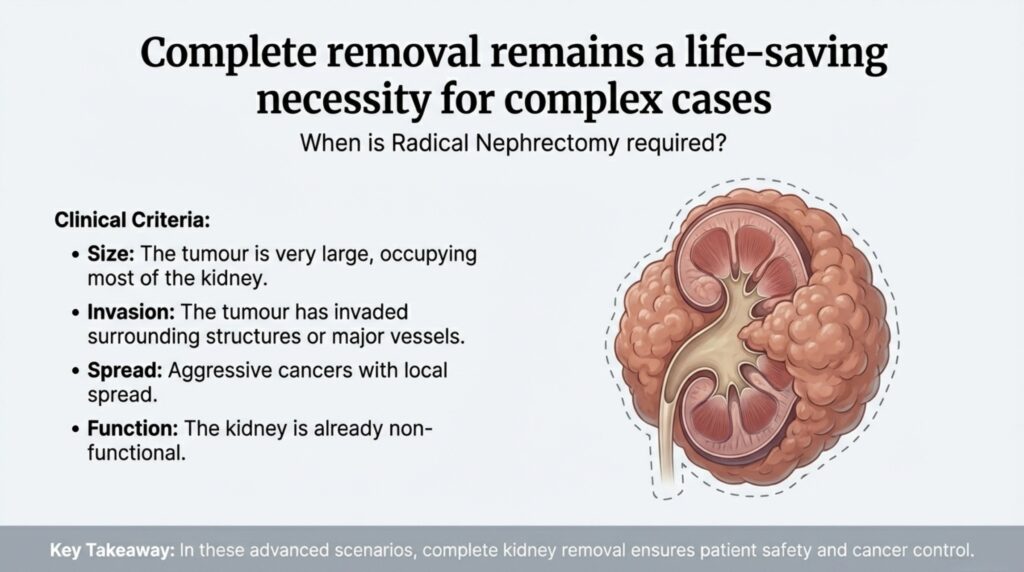
A radical nephrectomy involves removing the entire kidney along with surrounding fat tissue, and sometimes the adrenal gland or nearby lymph nodes if needed.

Radical nephrectomy may be performed when:

The tumor is very large

The tumor has invaded surrounding structures

Partial nephrectomy is not safe or possible

The kidney is already poorly functioning

Radical nephrectomy remains a life-saving operation in advanced or complex kidney cancers.

Robotic partial nephrectomy and radical nephrectomy are both important kidney cancer surgeries. The key difference is: Partial nephrectomy saves the kidney Radical nephrectomy removes the kidney when necessary Modern robotic surgery has made kidney-sparing treatment safer, more precise, and widely preferred for many patients with early kidney tumors. The best approach depends on careful imaging, expert surgical judgment, and individualized patient care.
Main Differences: Partial vs Radical Nephrectomy

1️⃣ Kidney Preservation vs Kidney Removal

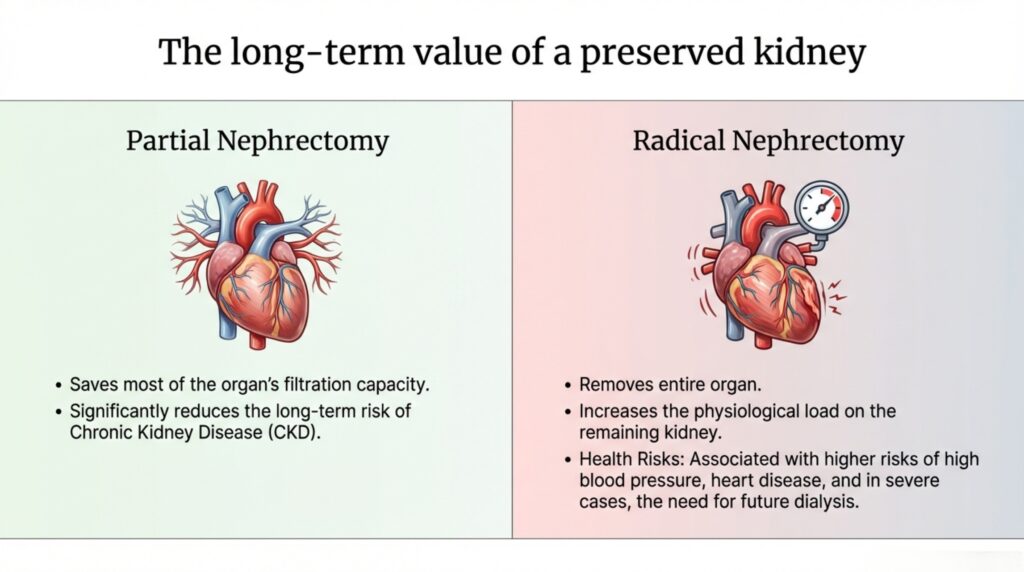
Partial nephrectomy saves most of the kidney

Radical nephrectomy removes the entire kidney

Preserving kidney tissue is important because reduced kidney function increases the risk of:

High blood pressure

Heart disease

Chronic kidney disease

Future dialysis in severe cases

2️⃣ Cancer Control Outcomes

Patients often worry whether partial nephrectomy is as effective as radical nephrectomy.

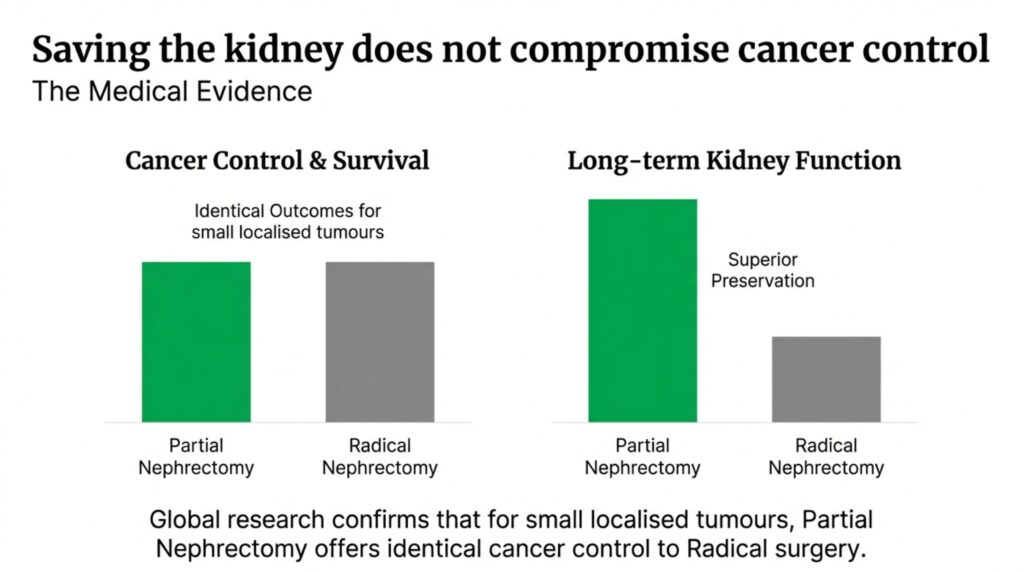
Research across the world has shown that for small localized tumors:

Partial nephrectomy provides cancer control similar to radical nephrectomy

Survival rates are comparable

Kidney function outcomes are significantly better with partial surgery

Therefore, partial nephrectomy is preferred whenever safe.

3️⃣ Robotic Advantage in Partial Nephrectomy

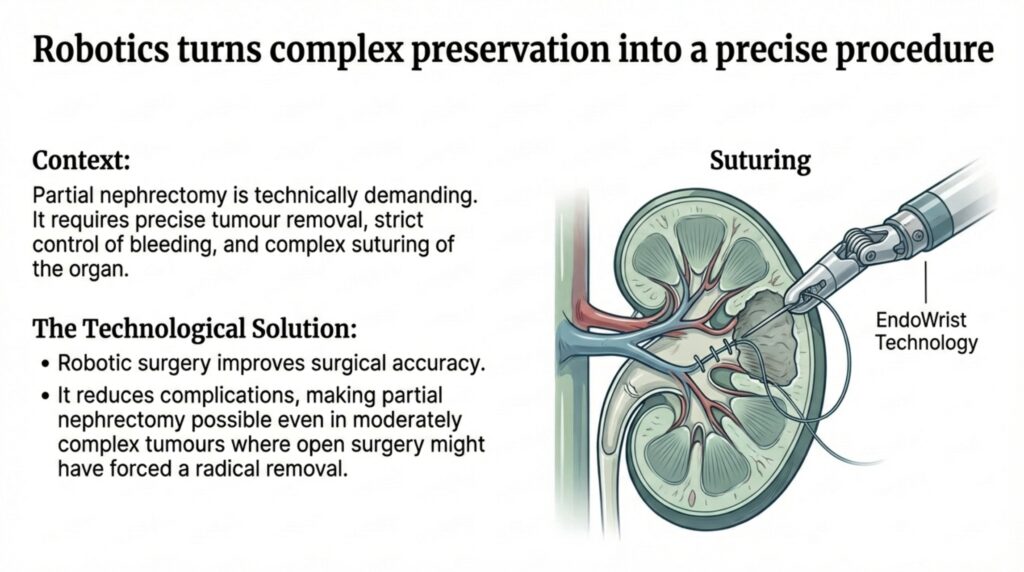
Robotic technology plays an especially important role in partial nephrectomy because the surgery requires:

Precise tumor removal

Control of bleeding

Complex kidney suturing

Robotic surgery improves surgical accuracy and reduces complications, making partial nephrectomy possible even in moderately complex tumors.

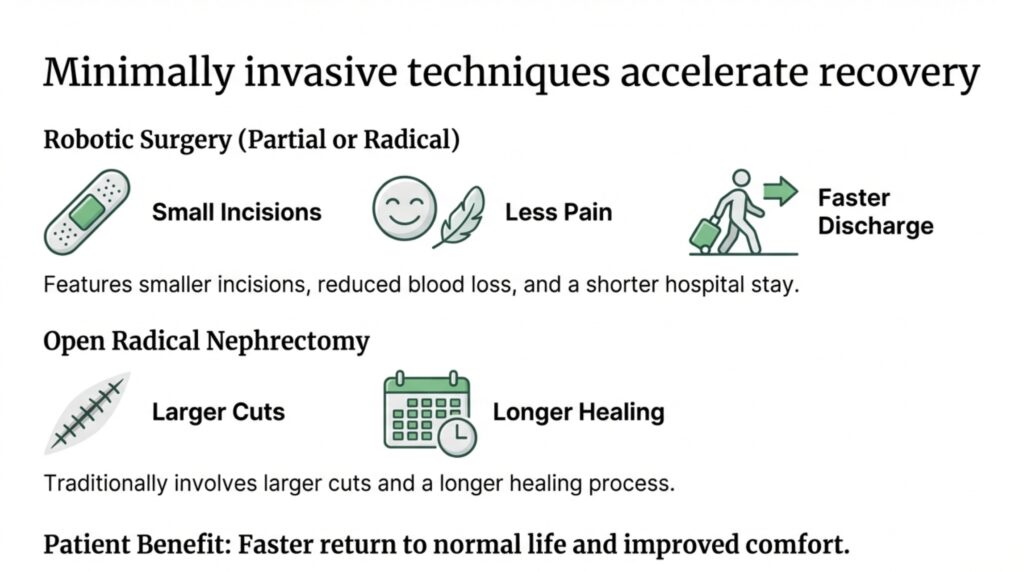
4️⃣ Recovery and Patient Comfort

Robotic surgeries, whether partial or radical, generally offer:

Smaller incisions

Less pain

Reduced blood loss

Faster recovery

Shorter hospital stay

Open radical nephrectomy usually involves larger cuts and longer healing.

5️⃣ When Radical Nephrectomy Is Necessary

Dr. Zaheen Khan explains that radical nephrectomy is still essential in cases such as:

Very large tumors occupying most of the kidney

Tumors involving major vessels

Aggressive cancers with local spread

Non-functional kidneys

In such cases, complete kidney removal ensures patient safety and cancer control.

Robotic partial nephrectomy and radical nephrectomy are both important kidney cancer surgeries. The key difference is: Partial nephrectomy saves the kidney Radical nephrectomy removes the kidney when necessary Modern robotic surgery has made kidney-sparing treatment safer, more precise, and widely preferred for many patients with early kidney tumors. The best approach depends on careful imaging, expert surgical judgment, and individualized patient care.
How Does a Surgeon Decide the Best Option?

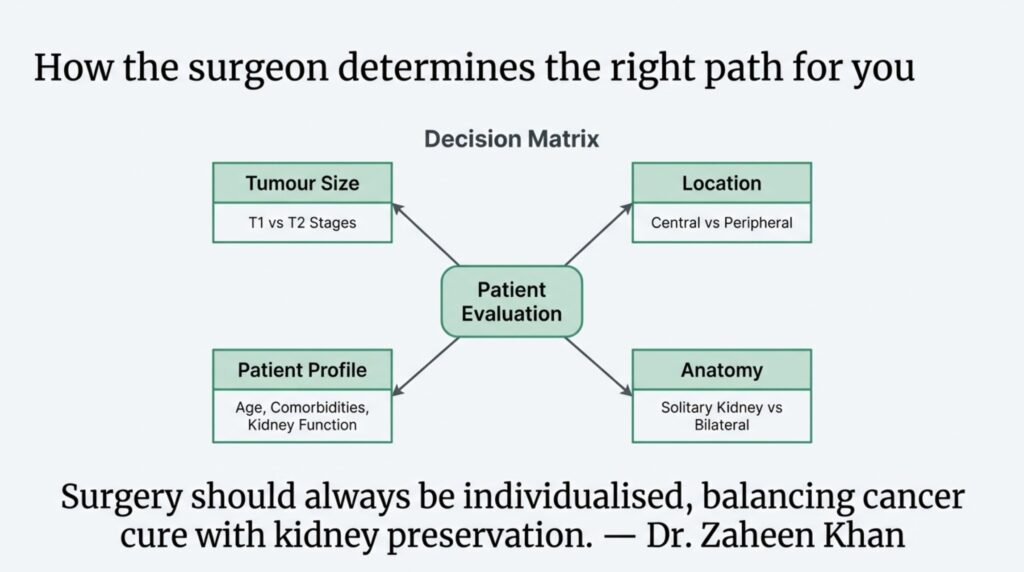
The decision is based on:

Tumor size (T1 vs T2)

Tumor location (central vs peripheral)

Kidney function tests

Patient’s age and comorbidities

Presence of one kidney or both kidneys

Imaging findings on CT/MRI

Dr. Zaheen Khan emphasizes that surgery should always be individualized, balancing cancer cure with kidney preservation.

Robotic partial nephrectomy and radical nephrectomy are both important kidney cancer surgeries. The key difference is: Partial nephrectomy saves the kidney Radical nephrectomy removes the kidney when necessary Modern robotic surgery has made kidney-sparing treatment safer, more precise, and widely preferred for many patients with early kidney tumors. The best approach depends on careful imaging, expert surgical judgment, and individualized patient care.
Importance of Early Diagnosis

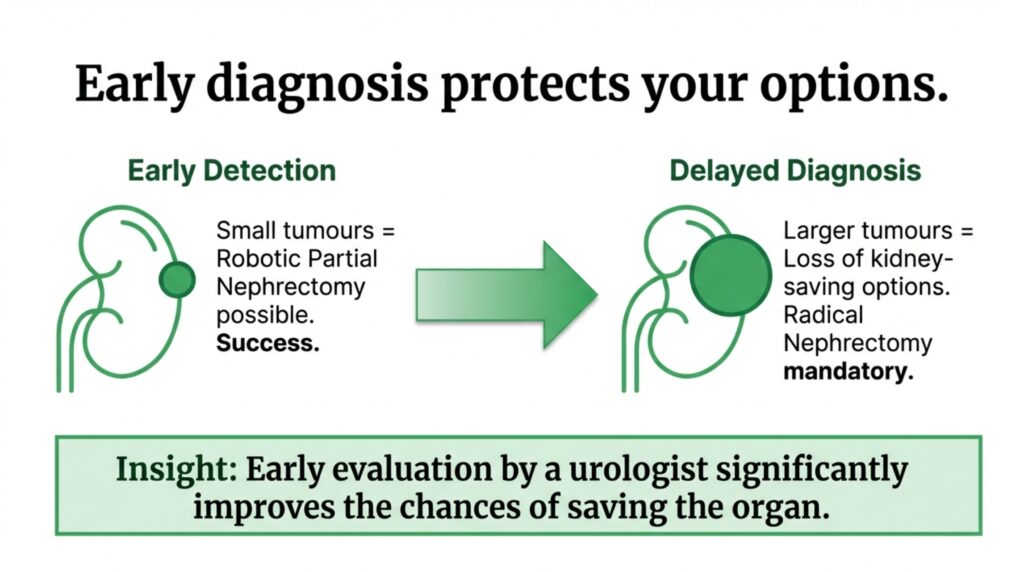
Small kidney tumors detected early are often treated successfully with robotic partial nephrectomy.

However, delayed diagnosis can lead to:

Larger tumors

Loss of kidney-saving options

Need for radical nephrectomy

Early evaluation by a urologist improves outcomes significantly.

Robotic partial nephrectomy and radical nephrectomy are both important kidney cancer surgeries. The key difference is: Partial nephrectomy saves the kidney Radical nephrectomy removes the kidney when necessary Modern robotic surgery has made kidney-sparing treatment safer, more precise, and widely preferred for many patients with early kidney tumors. The best approach depends on careful imaging, expert surgical judgment, and individualized patient care.

Robotic Kidney Surgery Access in Bihar and Nearby Regions

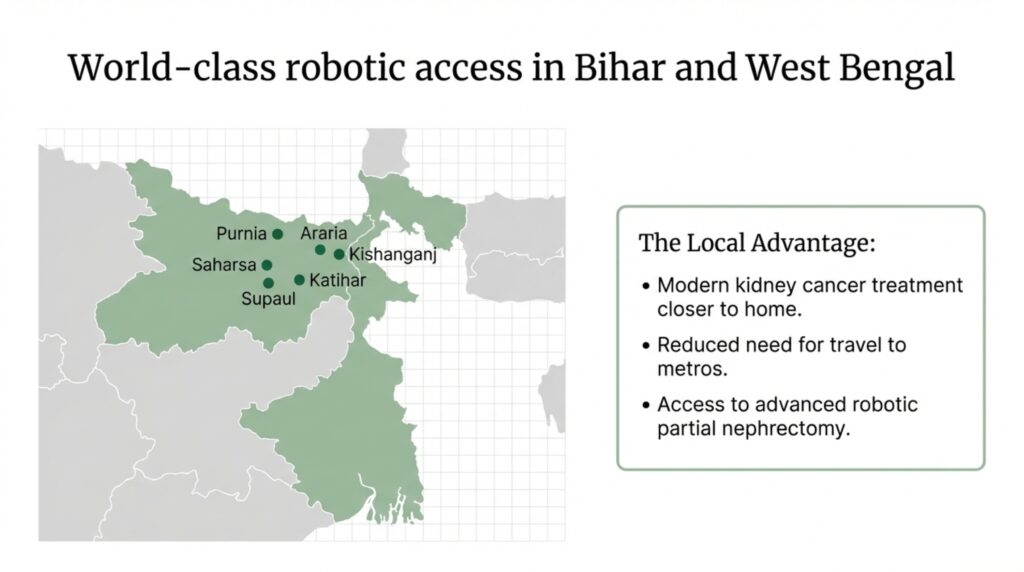
Patients from Purnia, Katihar, Araria, Kishanganj, Saharsa, Supaul, other districts of Bihar, and neighboring districts of West Bengal are increasingly seeking advanced robotic kidney surgery.

Robotic partial nephrectomy offers:

Modern kidney cancer treatment closer to home

Reduced complications and faster recovery

Better long-term kidney health

Dr. Zaheen Khan provides specialized evaluation for kidney tumor patients and offers robotic nephron-sparing surgery when appropriate.

Robotic partial nephrectomy and radical nephrectomy are both important kidney cancer surgeries. The key difference is: Partial nephrectomy saves the kidney Radical nephrectomy removes the kidney when necessary Modern robotic surgery has made kidney-sparing treatment safer, more precise, and widely preferred for many patients with early kidney tumors. The best approach depends on careful imaging, expert surgical judgment, and individualized patient care.
Final Thoughts

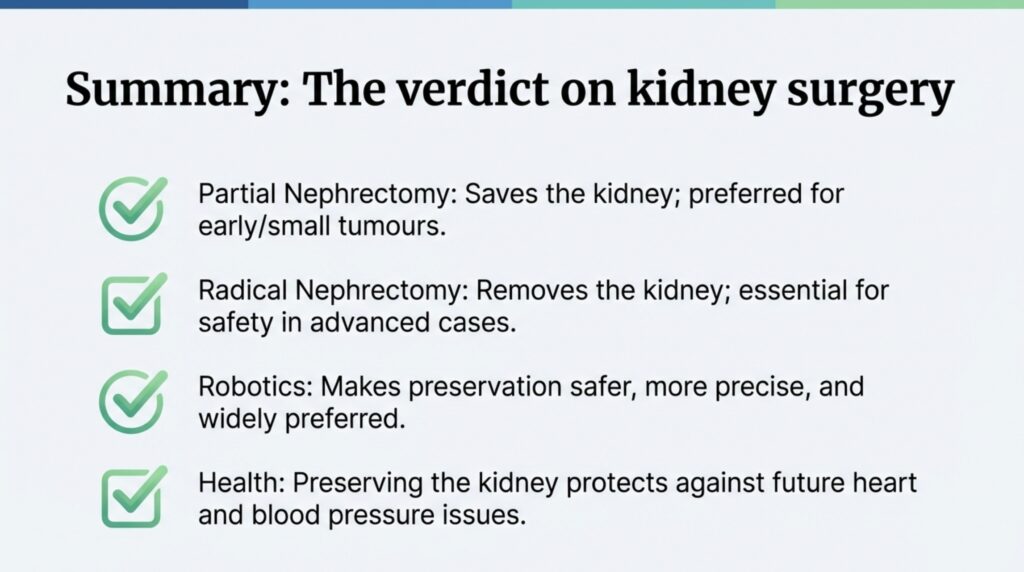
Robotic partial nephrectomy and radical nephrectomy are both important kidney cancer surgeries. The key difference is:

Partial nephrectomy saves the kidney

Radical nephrectomy removes the kidney when necessary

Modern robotic surgery has made kidney-sparing treatment safer, more precise, and widely preferred for many patients with early kidney tumors.

The best approach depends on careful imaging, expert surgical judgment, and individualized patient care.

Robotic partial nephrectomy and radical nephrectomy are both important kidney cancer surgeries. The key difference is: Partial nephrectomy saves the kidney Radical nephrectomy removes the kidney when necessary Modern robotic surgery has made kidney-sparing treatment safer, more precise, and widely preferred for many patients with early kidney tumors. The best approach depends on careful imaging, expert surgical judgment, and individualized patient care.