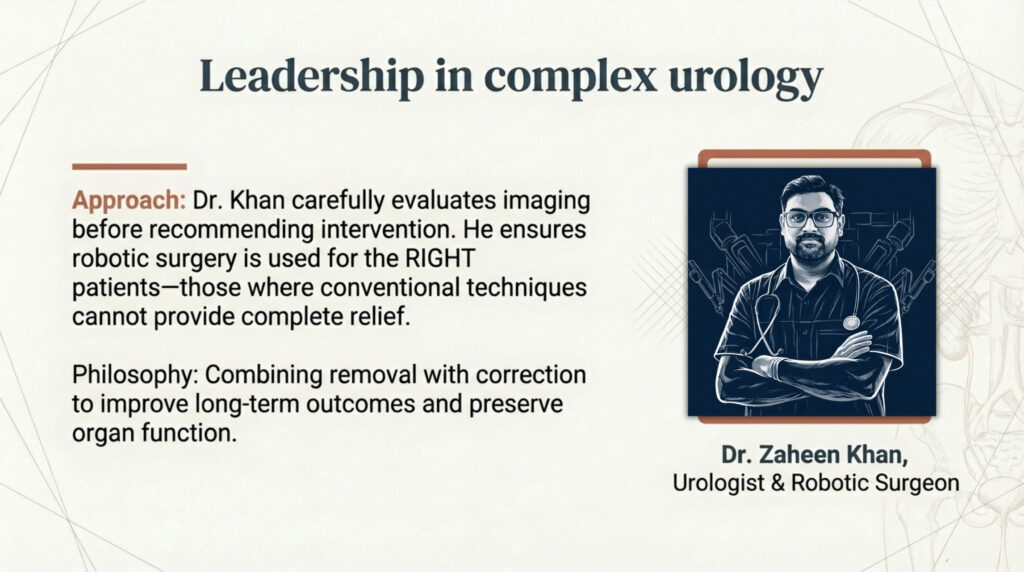
Robotic Assistance in Complex Kidney Stone Surgery: Advanced Treatment Explained : Dr. Zaheen Khan, Urologist and Robotic Surgeon
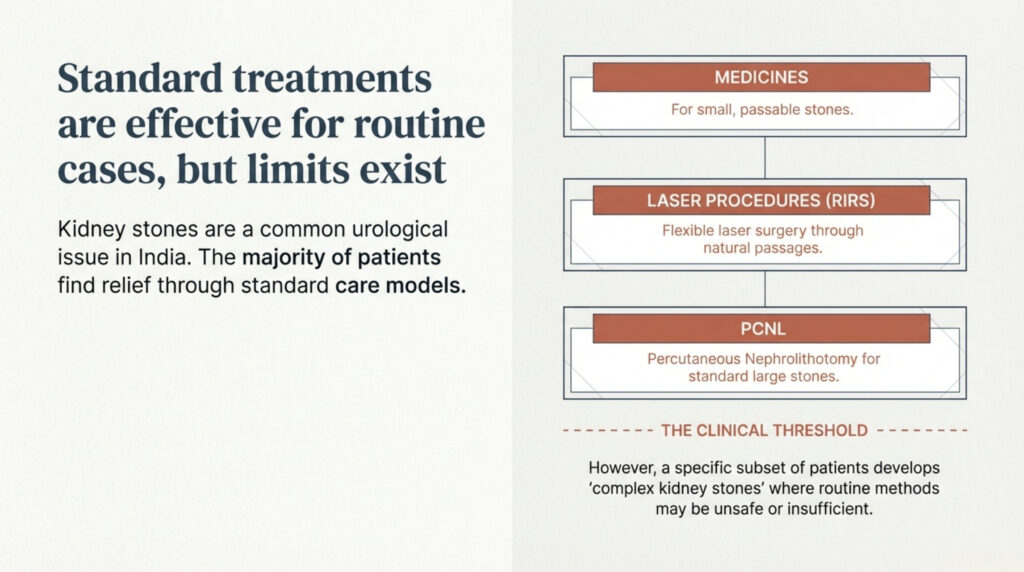
Kidney stones are one of the most common urological problems in India. While many stones can be treated with medicines, laser procedures, or PCNL, some patients develop complex kidney stones that cannot be safely removed using routine methods.
Large stones, recurrent stones, anatomical abnormalities, or previously failed surgeries make treatment challenging. In such situations, modern technology plays a crucial role.
According to Dr. Zaheen Khan, Urologist & Robotic Surgeon, robotic assistance has become an advanced option for selected difficult kidney stone cases, helping remove stones completely while preserving kidney function.
What Are Complex Kidney Stones?
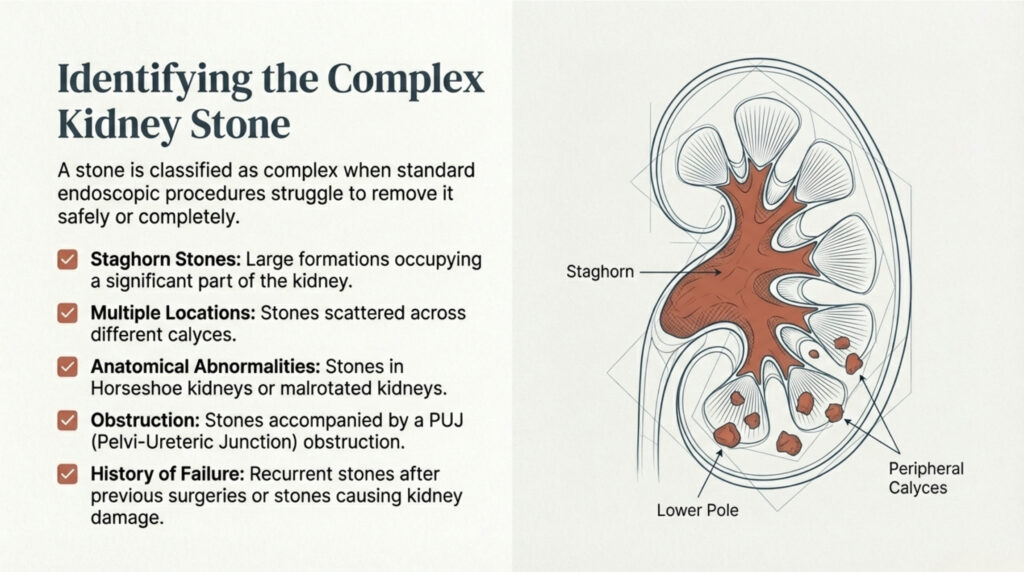
A kidney stone is considered complex when it becomes difficult to remove using standard endoscopic procedures.
Examples include:
Staghorn stones occupying large part of kidney
Multiple stones in different calyces
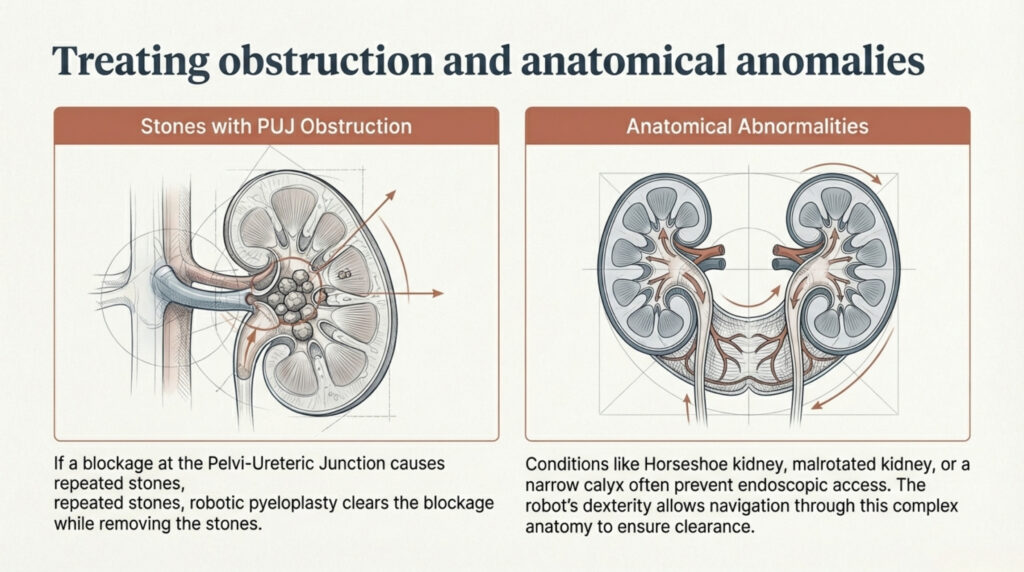
Stones with PUJ obstruction
Stones with anatomical abnormalities
Recurrent stones after previous surgeries
Stones associated with kidney damage
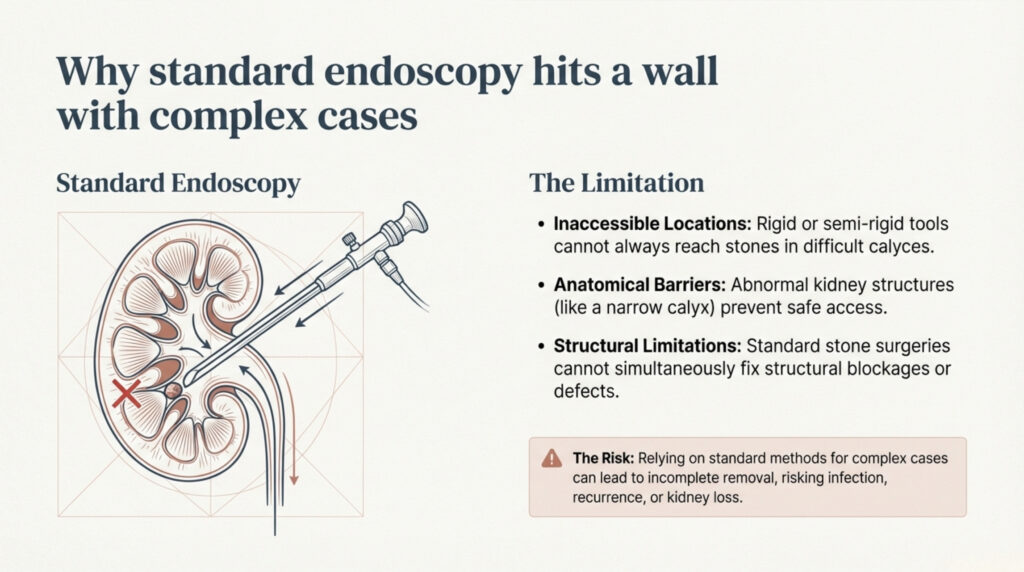
Such cases require careful planning because incomplete removal can lead to infection, recurrence, or kidney loss.
Traditional Treatment Options
PCNL (Percutaneous Nephrolithotomy)
Most large stones are treated with PCNL. A tract is created from skin into kidney to remove stones.
RIRS (Retrograde Intrarenal Surgery)
Flexible laser surgery through natural urinary passage.
However, in certain situations these methods may not be enough:
Difficult stone location
Abnormal kidney anatomy
Associated obstruction
Failed previous procedures
In these patients, robotic surgery may provide a better solution.
What Is Robotic Assistance in Kidney Stone Surgery?
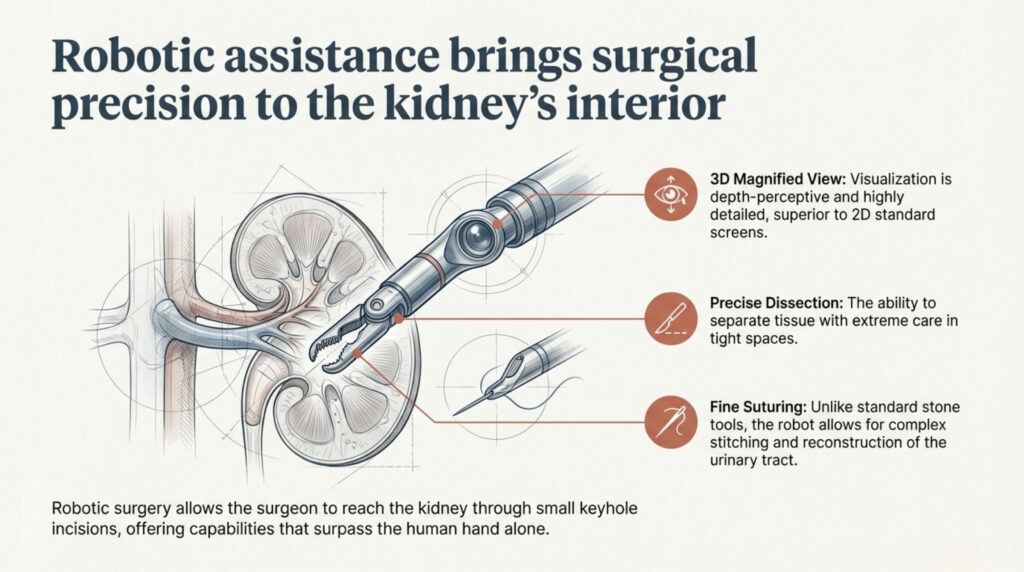
Robotic surgery allows the surgeon to reach the kidney through small keyhole incisions and directly remove stones or correct the structural problem causing them.
The robotic system provides:
3D magnified view
Precise dissection
Fine suturing ability
Safe reconstruction of urinary tract
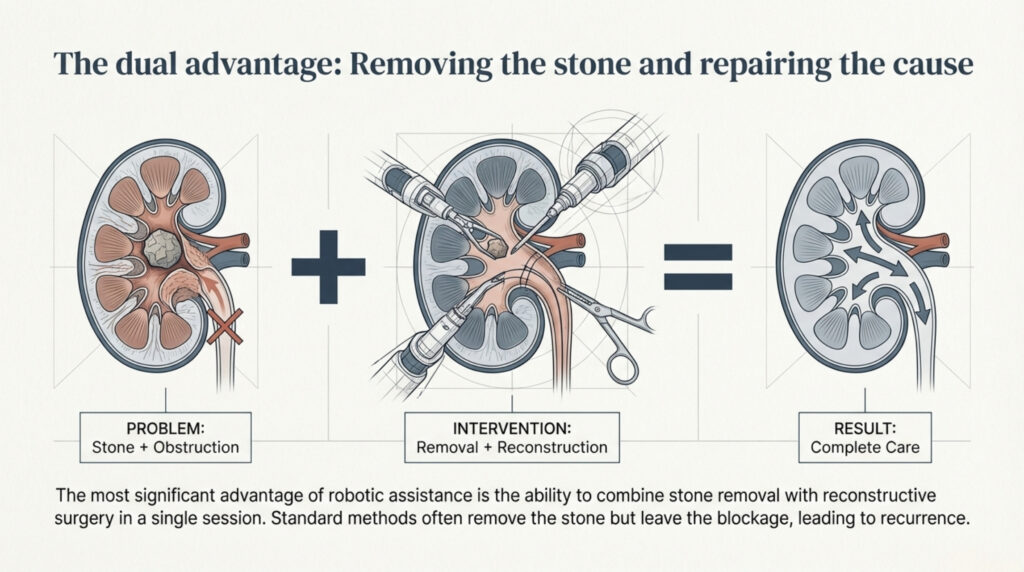
This is especially useful when stone removal must be combined with reconstructive surgery.
When Is Robotic Stone Surgery Needed?
Robotic assistance is considered in selected cases such as:
1. Stones with PUJ Obstruction
If a blockage is causing repeated stone formation, robotic pyeloplasty with stone removal treats both problems together.
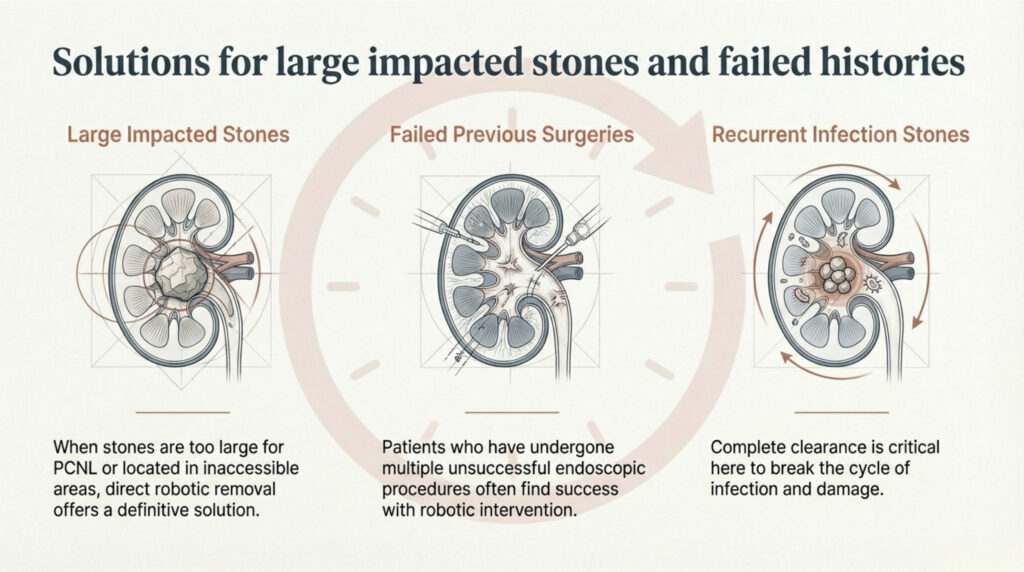
2. Large Impacted Stones Not Removable by PCNL
Very large stones in inaccessible locations may require direct removal.
3. Failed Previous Endoscopic Surgery
Patients who underwent multiple unsuccessful procedures may benefit from robotic surgery.
4. Anatomical Abnormalities
Horseshoe kidney, malrotated kidney, or narrow calyx may prevent endoscopic access.
5. Recurrent Infection Stones
Complete clearance is essential to prevent repeated infection and kidney damage.
Dr. Zaheen Khan carefully evaluates imaging before recommending robotic intervention.
Advantages of Robotic Surgery in Complex Stones
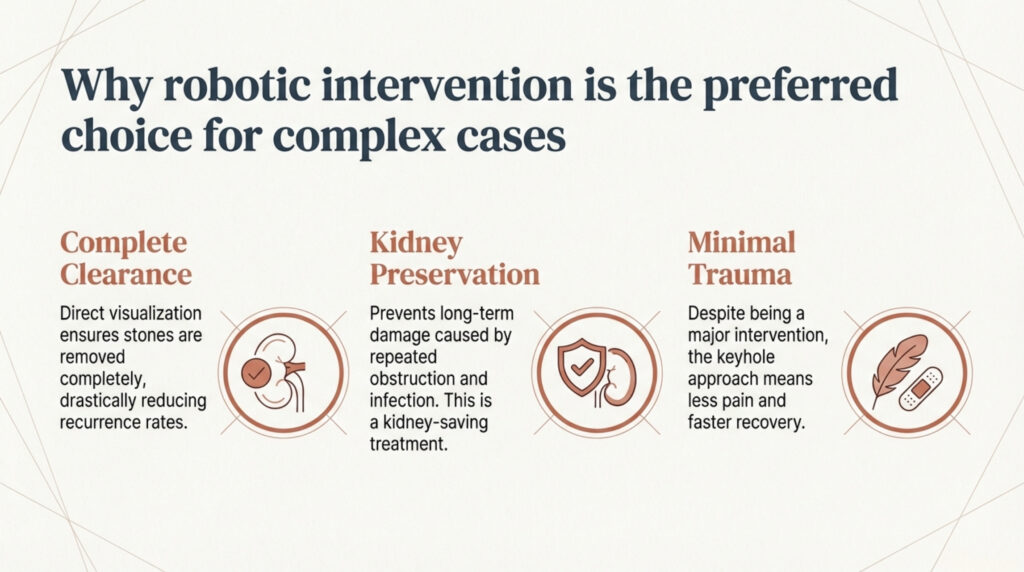
Complete Stone Clearance
Direct visualization helps remove stones completely, reducing recurrence.
Treat Cause and Stone Together
Structural blockage can be corrected in the same surgery.
Kidney Preservation
Prevents long-term kidney damage caused by repeated obstruction and infection.
Less Pain and Faster Recovery
Small incisions allow early mobilization and minimal discomfort.
Reduced Repeat Procedures
Many patients avoid multiple surgeries after definitive treatment.
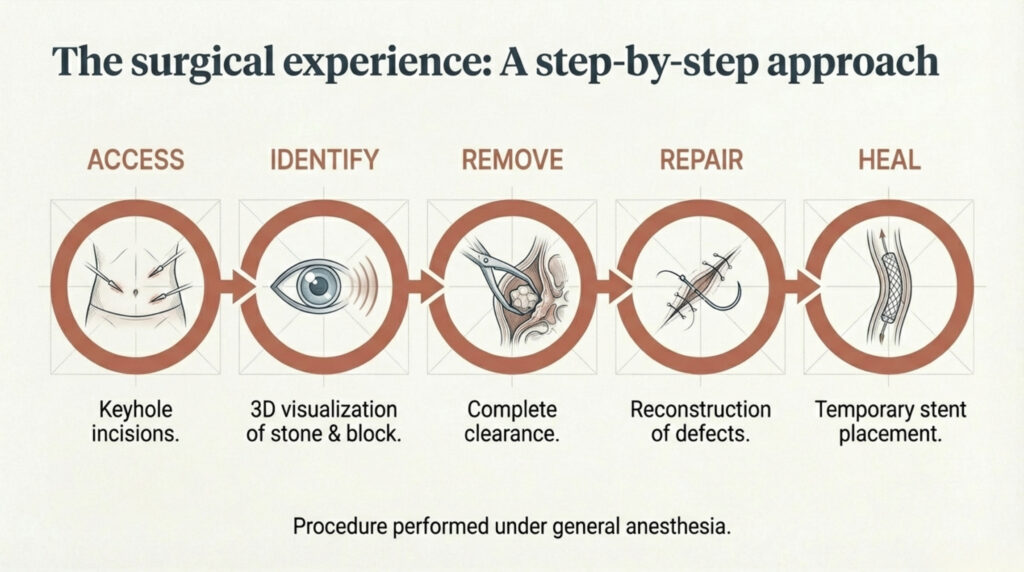
How the Surgery Is Performed?
The operation is performed under general anesthesia.
Steps include:
Access kidney through small incisions
Identify stone and obstruction
Remove stone fragments completely
Repair narrowed segment if present
Place temporary stent for healing
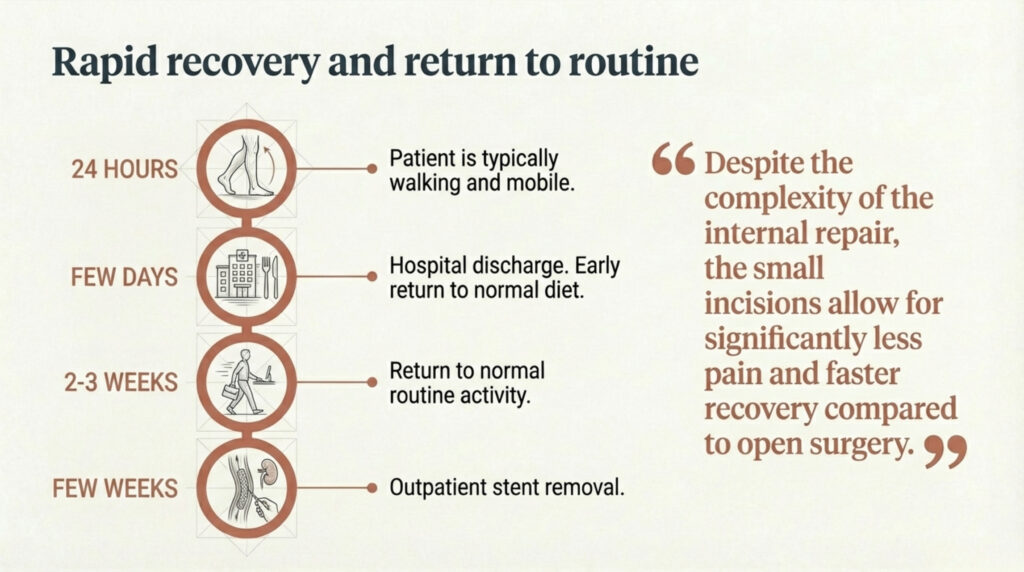
Most patients are discharged within a few days.
Recovery After Robotic Stone Surgery
Patients typically experience:
Walking within 24 hours
Mild pain
Early return to diet
Stent removal after few weeks
Normal routine activity resumes in about 2–3 weeks.
Why Timely Treatment Is Important?
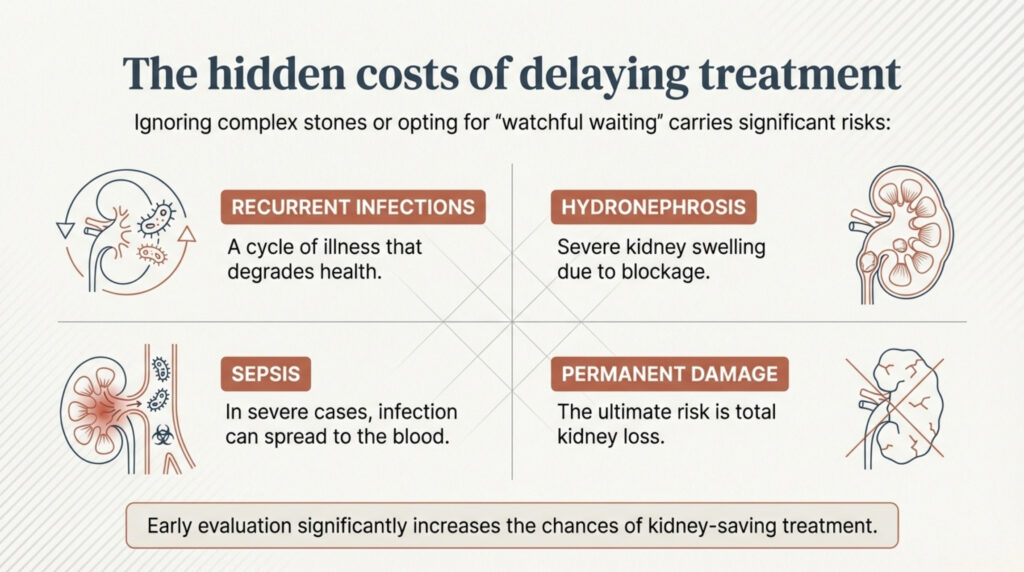
Ignoring complex stones can cause:
Recurrent infections
Kidney swelling (hydronephrosis)
Permanent kidney damage
Sepsis in severe cases
Early evaluation increases chances of kidney-saving treatment.
Advanced Stone Care in Bihar
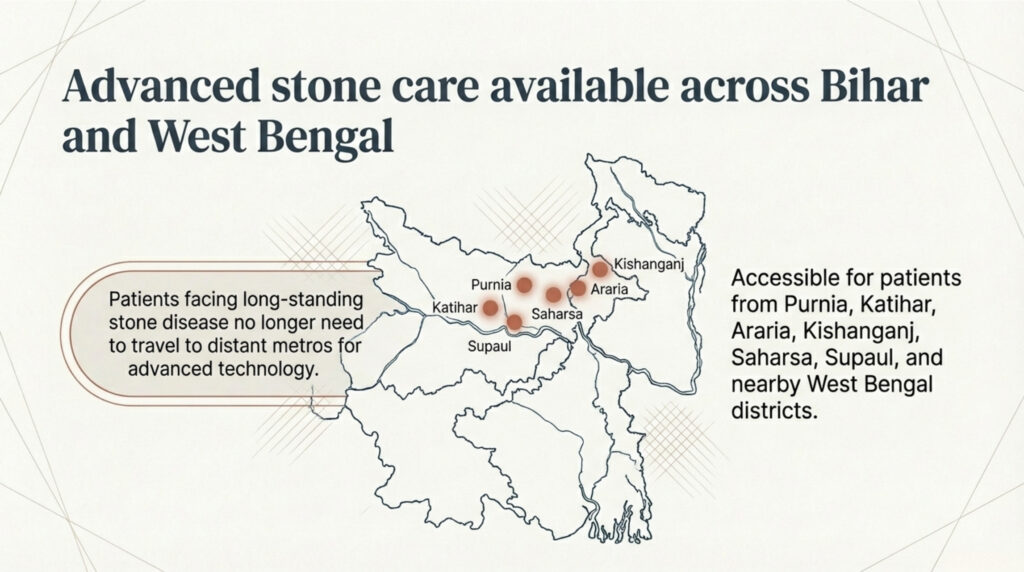
Patients from Purnia, Katihar, Araria, Kishanganj, Saharsa, Supaul, across Bihar, and nearby West Bengal districts frequently present with long-standing stone disease.
Robotic assistance now provides advanced treatment options closer to home.
Dr. Zaheen Khan evaluates complex kidney stone cases and recommends robotic surgery when conventional techniques cannot provide complete relief.
While most kidney stones are treated with standard endoscopic methods, certain difficult cases require advanced surgical planning. Robotic assistance offers a precise and definitive solution for selected complex kidney stone patients.
By combining stone removal with correction of underlying problems, robotic surgery improves long-term outcomes and protects kidney health.