• +91 7250317972

  • Purnia, Bihar

  • 24 Hrs

Kidney stones are one of the most common urological problems in India. While many stones can be treated with medicines, laser procedures, or PCNL, some patients develop complex kidney stones that cannot be safely removed using routine methods. Large stones, recurrent stones, anatomical abnormalities, or previously failed surgeries make treatment challenging. In such situations, modern technology plays a crucial role. According to Dr. Zaheen Khan, Urologist & Robotic Surgeon, robotic assistance has become an advanced option for selected difficult kidney stone cases, helping remove stones completely while preserving kidney function.
Robotic Assistance in Complex Kidney Stone Surgery: Advanced Treatment Explained : Dr. Zaheen Khan, Urologist and Robotic Surgeon

Kidney stones are one of the most common urological problems in India. While many stones can be treated with medicines, laser procedures, or PCNL, some patients develop complex kidney stones that cannot be safely removed using routine methods.

Large stones, recurrent stones, anatomical abnormalities, or previously failed surgeries make treatment challenging. In such situations, modern technology plays a crucial role.

According to Dr. Zaheen Khan, Urologist & Robotic Surgeon, robotic assistance has become an advanced option for selected difficult kidney stone cases, helping remove stones completely while preserving kidney function.

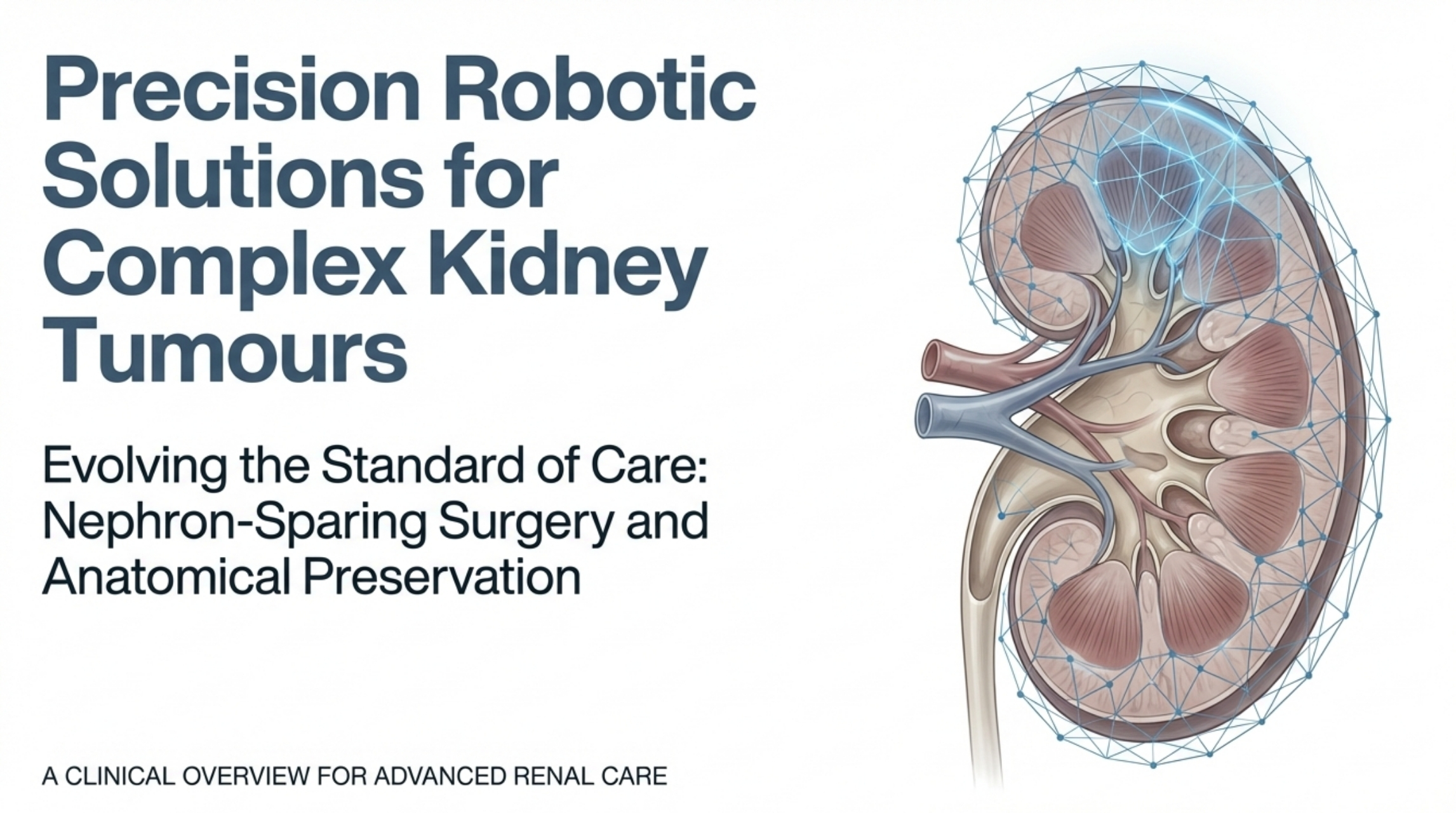
Robotic Surgery for Complex Kidney Tumours (Cancer) Dr. Zaheen Khan, Urologist and Robotic Surgeon
Robotic Surgery for Complex Kidney Tumors: Advanced Kidney-Saving Treatment

Kidney tumors are not always simple to treat. While many small kidney masses can be removed easily, some tumors are considered complex kidney tumors because of their size, deep location, proximity to major blood vessels, or involvement of important kidney structures.

In the past, such tumors almost always required removal of the entire kidney through large open surgery. Today, with modern technology, many of these cases can be treated using robotic surgery.

According to Dr. Zaheen Khan, Urologist & Robotic Surgeon, robotic kidney tumor surgery has significantly improved the ability to remove difficult tumors while still preserving kidney function whenever safely possible.

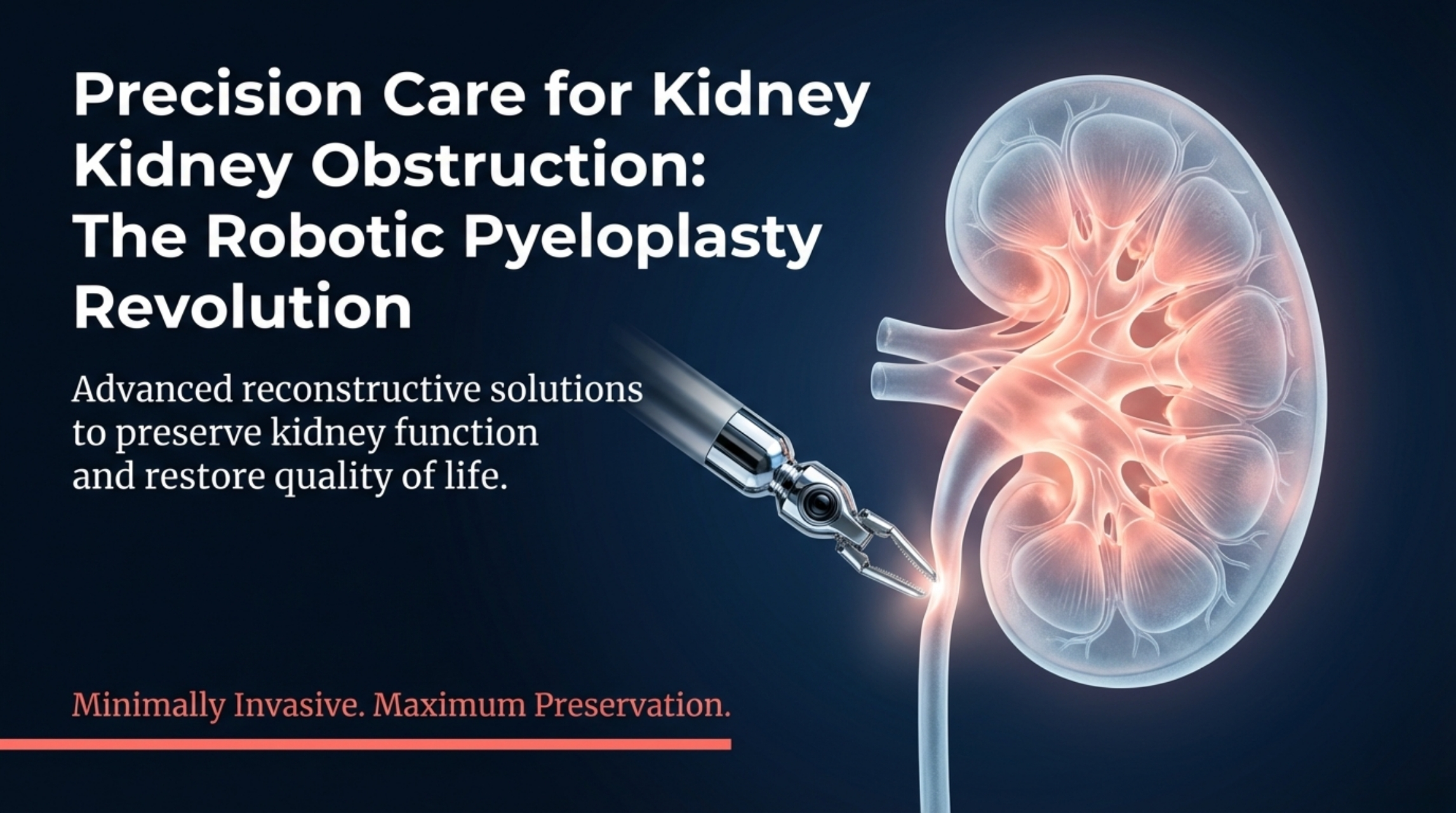
Ureteropelvic Junction (PUJ) obstruction is a condition in which the flow of urine from the kidney to the ureter becomes blocked. This blockage causes urine to accumulate inside the kidney, leading to swelling (hydronephrosis), pain, repeated infections, and gradual kidney damage. Traditionally, PUJ obstruction required open surgery with large incisions and long recovery. Today, robotic surgery has transformed its treatment. According to Dr. Zaheen Khan, Urologist & Robotic Surgeon, robotic pyeloplasty offers a precise and minimally invasive solution that preserves kidney function and allows patients to recover faster with less discomfort.
Robotic Pyeloplasty for PUJ Obstruction: Kidney-Saving Surgery Explained: Dr. Zaheen Khan, Urologist and Robotic Surgeon

Ureteropelvic Junction (PUJ) obstruction is a condition in which the flow of urine from the kidney to the ureter becomes blocked. This blockage causes urine to accumulate inside the kidney, leading to swelling (hydronephrosis), pain, repeated infections, and gradual kidney damage.

Traditionally, PUJ obstruction required open surgery with large incisions and long recovery. Today, robotic surgery has transformed its treatment.

According to Dr. Zaheen Khan, Urologist & Robotic Surgeon, robotic pyeloplasty offers a precise and minimally invasive solution that preserves kidney function and allows patients to recover faster with less discomfort.

Robotic Surgery Recovery Roadmap Dr. Zaheen Khan Urologist and Robotic Surgeon
Recovery After Robotic Urology Surgery: What Patients Should Expect: Dr. Zaheen Khan, Urologist and Robotic Surgeon

Robotic urological surgery has transformed the way kidney and prostate diseases are treated. Compared to traditional open surgery, robotic procedures are minimally invasive, more precise, and associated with faster recovery.

However, one of the most common questions patients ask before surgery is:

“How long will recovery take and what will I feel after the operation?”

According to Dr. Zaheen Khan, Urologist & Robotic Surgeon, recovery after robotic surgery is usually smoother than patients expect — but understanding each stage helps patients heal faster and avoid complications.

This guide explains what patients should realistically expect after robotic urology surgery.

Learn who is eligible for robotic urological surgery for kidney tumors, prostate enlargement, and cancer with expert care by Dr. Zaheen Khan urologist and robotic surgeon in Purnia, Bihar.
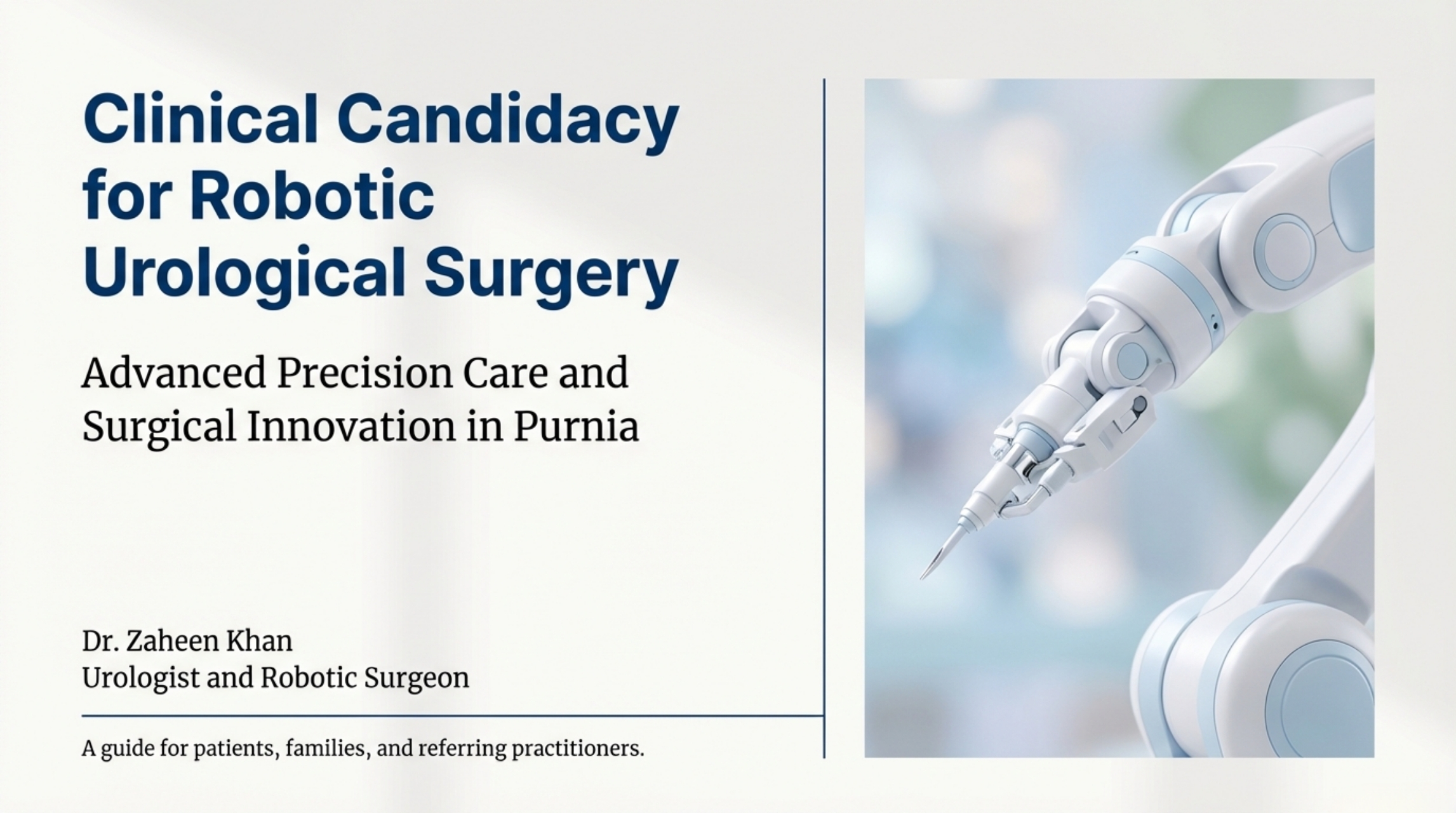
Who Is a Candidate for Robotic Urological Surgery? Expert Guidance by Dr. Zaheen Khan, Urologist and Robotic Surgeon

Robotic-assisted surgery has become one of the most important advancements in modern urology. Over the last decade, robotic urological surgery has helped patients receive safer, more precise, and minimally invasive treatment for complex kidney, prostate, bladder, and urinary tract conditions.

However, not every patient requires robotic surgery. The decision depends on the disease type, severity, overall health, and expected surgical outcomes.

In Bihar, where many patients still travel to metro cities for advanced urology care, specialists like Dr. Zaheen Khan, Urologist and Robotic Surgeon, are making robotic surgery accessible for patients in Purnia and nearby districts.

Understanding who is a candidate for robotic urological surgery is essential for patients considering modern treatment options.

Robotic surgery has transformed the field of modern urology by making complex procedures safer, more precise, and significantly less invasive. In recent years, robotic urology has become a preferred option for treating kidney tumors, prostate enlargement, prostate cancer, and other advanced urinary tract disorders. In Bihar, where urological diseases are often diagnosed late due to limited awareness and access, advanced robotic care is becoming increasingly important. Specialists like Dr. Zaheen Khan, Urologist and Robotic Surgeon, are bringing world-class robotic urology techniques to patients in Purnia and surrounding districts. Robotic urology offers multiple benefits over traditional open surgery, especially for kidney and prostate diseases.
Benefits of Robotic Urology for Kidney and Prostate Diseases: Advanced Care by Dr. Zaheen Khan, Urologist and Robotic Surgeon

Robotic surgery has transformed the field of modern urology by making complex procedures safer, more precise, and significantly less invasive. In recent years, robotic urology has become a preferred option for treating kidney tumors, prostate enlargement, prostate cancer, and other advanced urinary tract disorders.

In Bihar, where urological diseases are often diagnosed late due to limited awareness and access, advanced robotic care is becoming increasingly important. Specialists like Dr. Zaheen Khan, Urologist and Robotic Surgeon, are bringing world-class robotic urology techniques to patients in Purnia and surrounding districts.

Robotic urology offers multiple benefits over traditional open surgery, especially for kidney and prostate diseases.

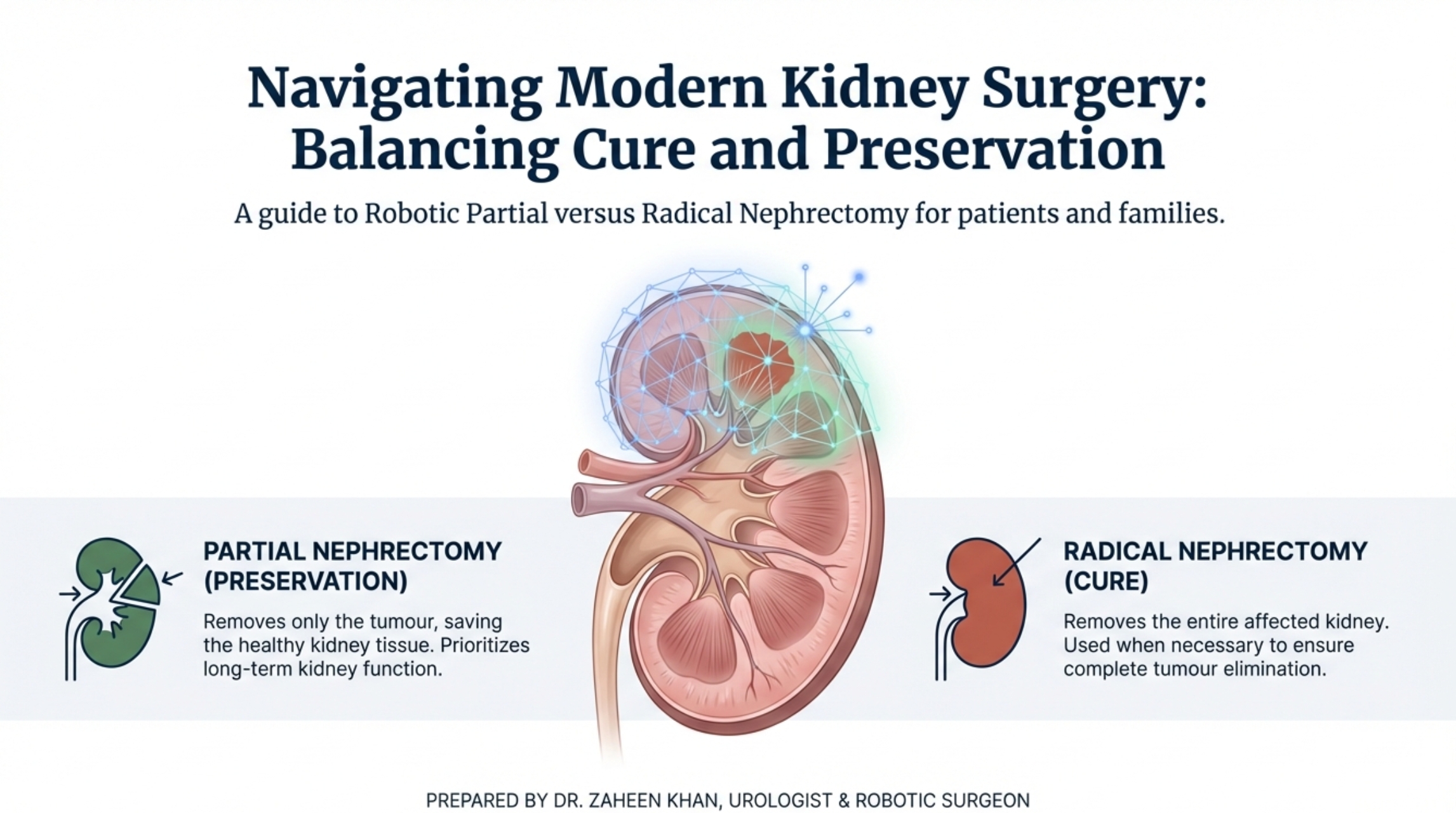
Robotic partial nephrectomy and radical nephrectomy are both important kidney cancer surgeries. The key difference is: Partial nephrectomy saves the kidney Radical nephrectomy removes the kidney when necessary Modern robotic surgery has made kidney-sparing treatment safer, more precise, and widely preferred for many patients with early kidney tumors. The best approach depends on careful imaging, expert surgical judgment, and individualized patient care.
Robotic Partial Nephrectomy vs Radical Nephrectomy: Which Kidney Surgery Is Better? Dr. Zaheen Khan, Urologist and Robotic Surgeon

Robotic partial nephrectomy and radical nephrectomy are both important kidney cancer surgeries. The key difference is:

Partial nephrectomy saves the kidney

Radical nephrectomy removes the kidney when necessary

Modern robotic surgery has made kidney-sparing treatment safer, more precise, and widely preferred for many patients with early kidney tumors.

The best approach depends on careful imaging, expert surgical judgment, and individualized patient care.

Urology has seen a major transformation over the last two decades. Procedures that once required large incisions and long hospital stays are now increasingly performed using minimally invasive and robotic techniques. One of the most common questions patients ask today is: Robotic surgery or open surgery – which is better? According to Dr. Zaheen Khan, Urologist & Robotic Surgeon, the answer depends on the disease, patient condition, and surgical expertise, but in many modern urological conditions, robotic surgery offers clear advantages for patients.
Robotic vs Open Urology Surgery: Which One Is Better for Patients?

Urology has seen a major transformation over the last two decades. Procedures that once required large incisions and long hospital stays are now increasingly performed using minimally invasive and robotic techniques. One of the most common questions patients ask today is: Robotic surgery or open surgery – which is better?

According to Dr. Zaheen Khan, Urologist & Robotic Surgeon, the answer depends on the disease, patient condition, and surgical expertise, but in many modern urological conditions, robotic surgery offers clear advantages for patients.

Urinary problems in women
Burning, Pain & Frequent Urination in Women: Understanding UTI, Overactive Bladder, and Bladder Pain Syndrome- Dr. Zaheen Khan, Urologist and Robotic Surgeon

Urinary problems in women are extremely common and often confusing. Symptoms such as burning during urination, pain, frequent urination, urgency, discomfort after passing urine, and a persistent feeling of bladder fullness can significantly affect daily life. While many patients initially assume these symptoms are due to a urinary tract infection (UTI), the underlying cause is not always so simple.

According to Dr. Zaheen Khan, Urologist & Robotic Surgeon, several urological conditions can present with overlapping symptoms, making accurate diagnosis essential for effective treatment. The three most commonly confused conditions in such cases are Urinary Tract Infection (UTI), Overactive Bladder (OAB), and Bladder Pain Syndrome (BPS), also known as Interstitial Cystitis.