Life-Saving, Kidney-Preserving Treatment by Dr. Zaheen Khan
Renal Artery Embolization (RAE)
Renal Artery Embolization (RAE) is a highly advanced minimally invasive procedure used to control bleeding from the kidney without open surgery. At Urology and Kidney Institute & Maternity Centre, Purnea, Dr. Zaheen Khan uses renal artery embolization to treat severe blood in urine (hematuria), kidney tumor–related bleeding, and post-surgical kidney bleeding with precision and safety.
This procedure plays a critical role in saving kidneys, avoiding major surgery, and stabilizing patients in emergency situations.
What Is Renal Artery Embolization?
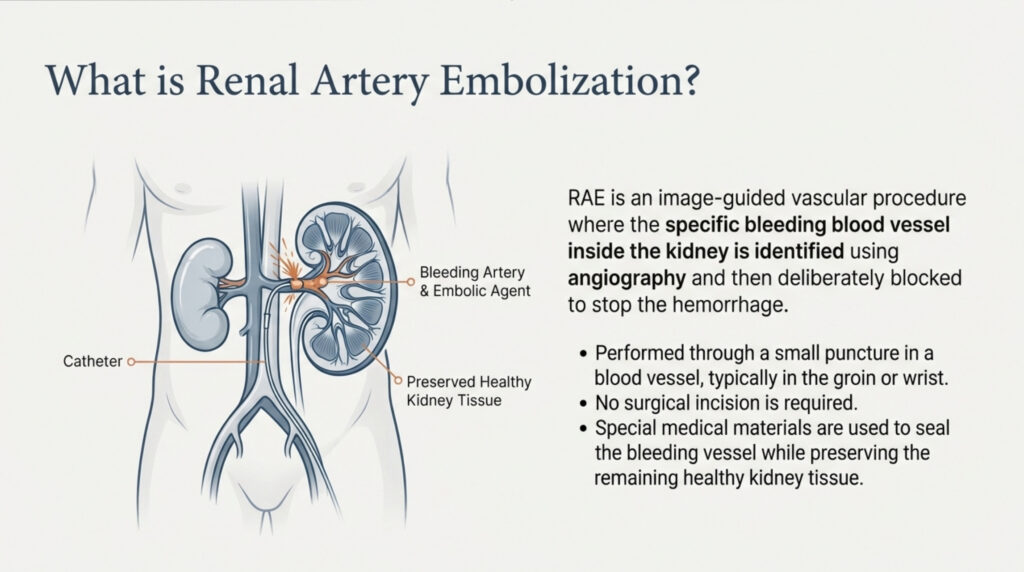
Renal artery embolization is an image-guided vascular procedure in which the bleeding blood vessel inside the kidney is identified using angiography and then deliberately blocked to stop bleeding.
The procedure is performed through a small puncture in the blood vessel, usually in the groin or wrist, without any surgical incision. Special medical materials are used to seal the bleeding vessel while preserving the remaining healthy kidney tissue.
When Is Renal Artery Embolization Required?
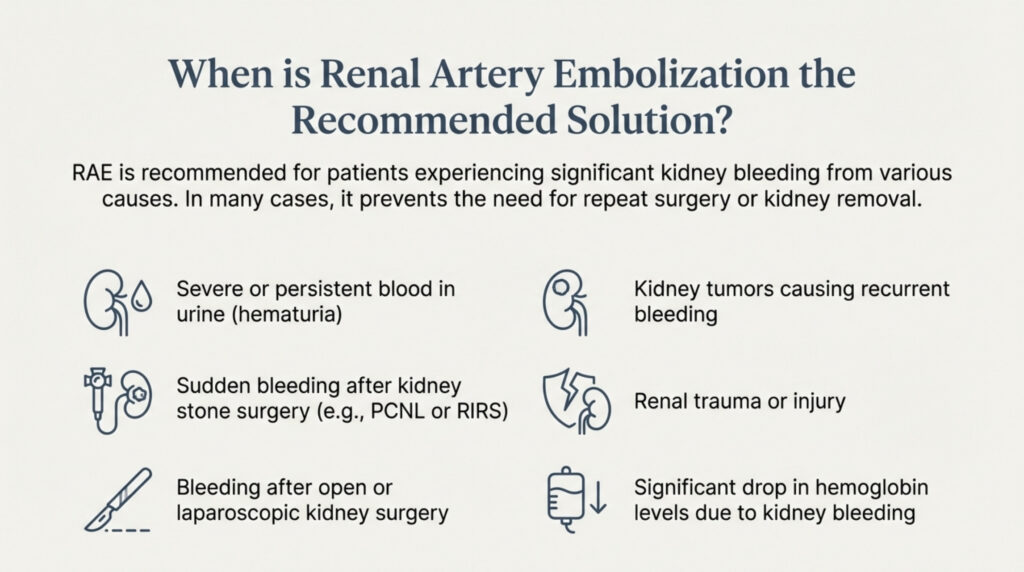
Renal artery embolization is recommended in patients with:
Severe or persistent blood in urine (hematuria)
Sudden bleeding after kidney stone surgery such as PCNL or RIRS
Bleeding after open or laparoscopic kidney surgery
Kidney tumors causing recurrent bleeding
Renal trauma or injury
Drop in hemoglobin levels due to kidney bleeding
In many cases, RAE prevents the need for repeat surgery or kidney removal.
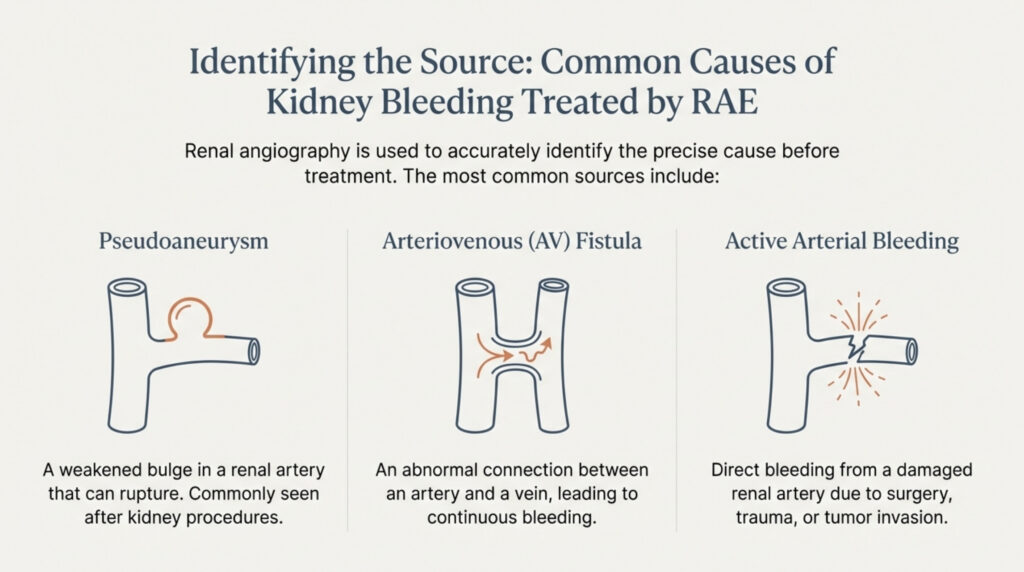
Common Causes of Kidney Bleeding Treated by RAE
Pseudoaneurysm
A weakened bulge in a renal artery that can rupture and cause heavy bleeding, commonly seen after kidney procedures.
Arteriovenous (AV) Fistula
An abnormal connection between an artery and vein in the kidney, leading to continuous bleeding.
Active Arterial Bleeding
Direct bleeding from a damaged renal artery due to surgery, trauma, or tumor invasion.
Renal angiography helps accurately identify these causes before treatment.
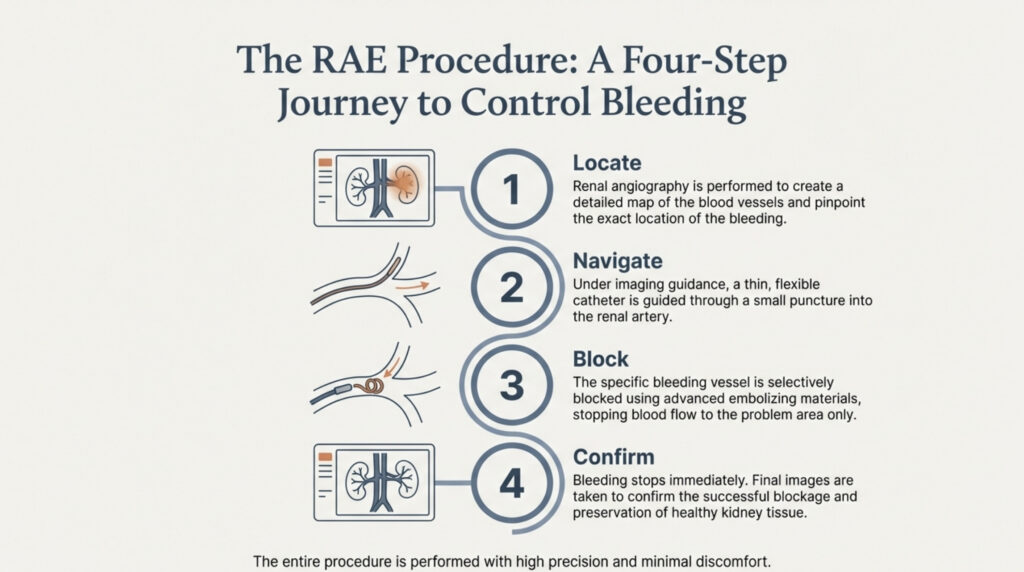
How Is Renal Artery Embolization Performed?
Renal Angiography is first performed to locate the exact bleeding vessel
A thin catheter is guided into the renal artery under imaging guidance
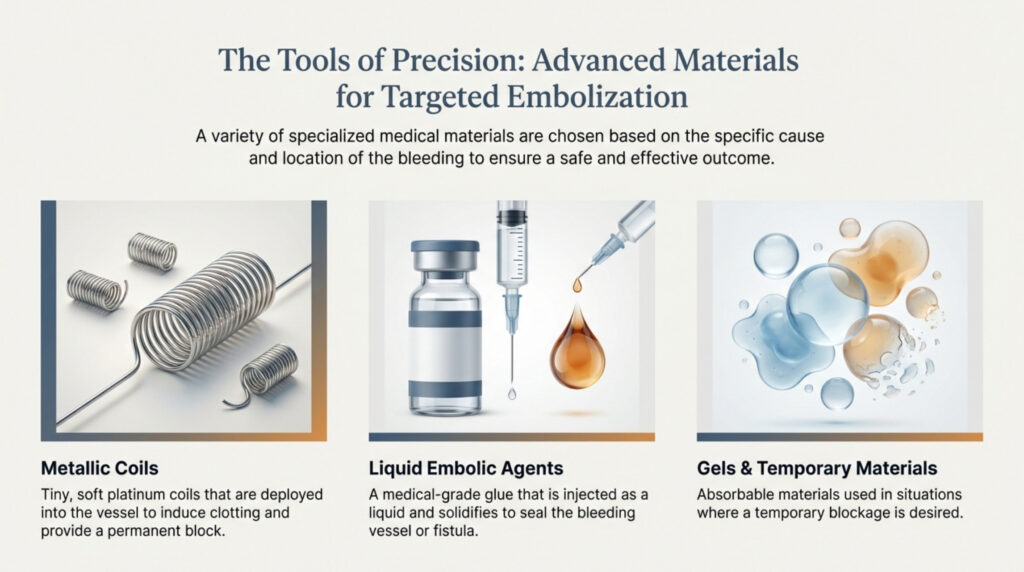
The bleeding vessel is selectively blocked using:
Metallic coils
Liquid embolic agents (medical glue)
Gel or temporary embolizing materials
Bleeding stops immediately while healthy kidney tissue is preserved
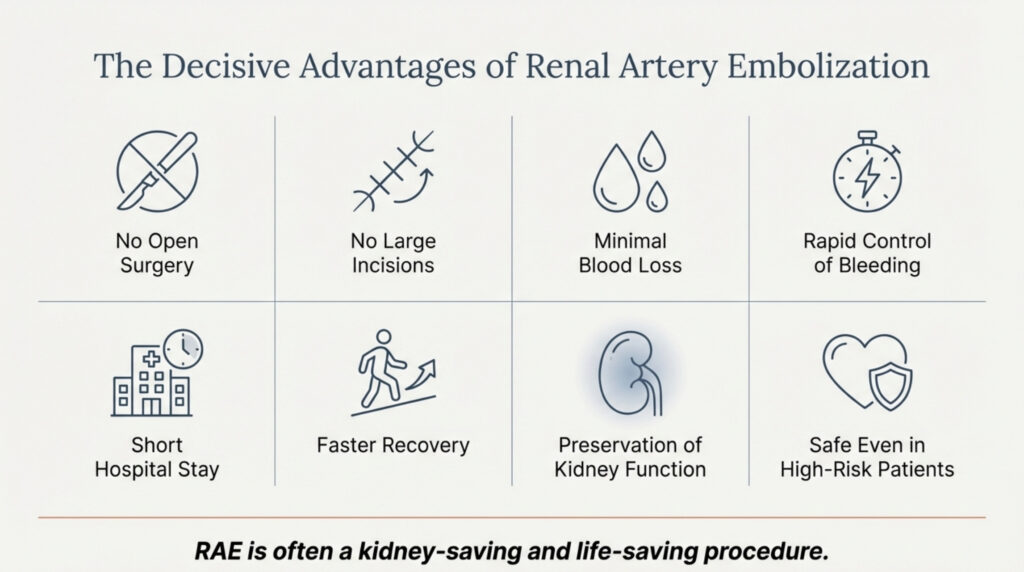
RAE is often a kidney-saving and life-saving procedure.
Recovery After Renal Artery Embolization
Most patients:
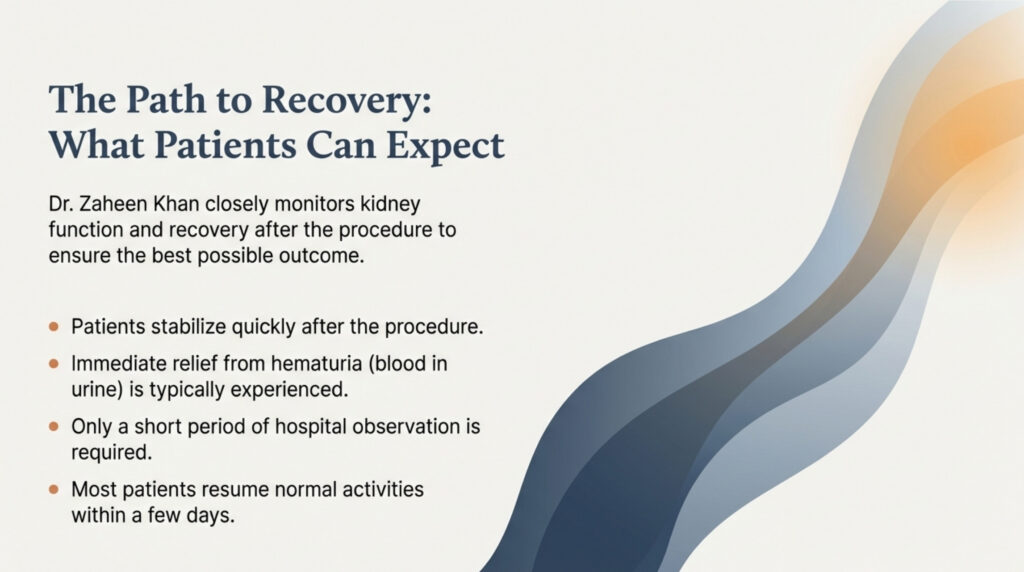
Stabilize quickly after the procedure
Experience relief from hematuria
Require only short hospital observation
Resume normal activities within a few days
Dr. Zaheen Khan closely monitors kidney function and recovery after the procedure.
Why Choose Dr. Zaheen Khan for Renal Artery Embolization in Purnea?
As a Urologist & Robotic Surgeon, Dr. Zaheen Khan understands both the surgical and vascular aspects of kidney disease. This allows him to make timely decisions regarding when embolization is needed and how to integrate it with urological treatment.
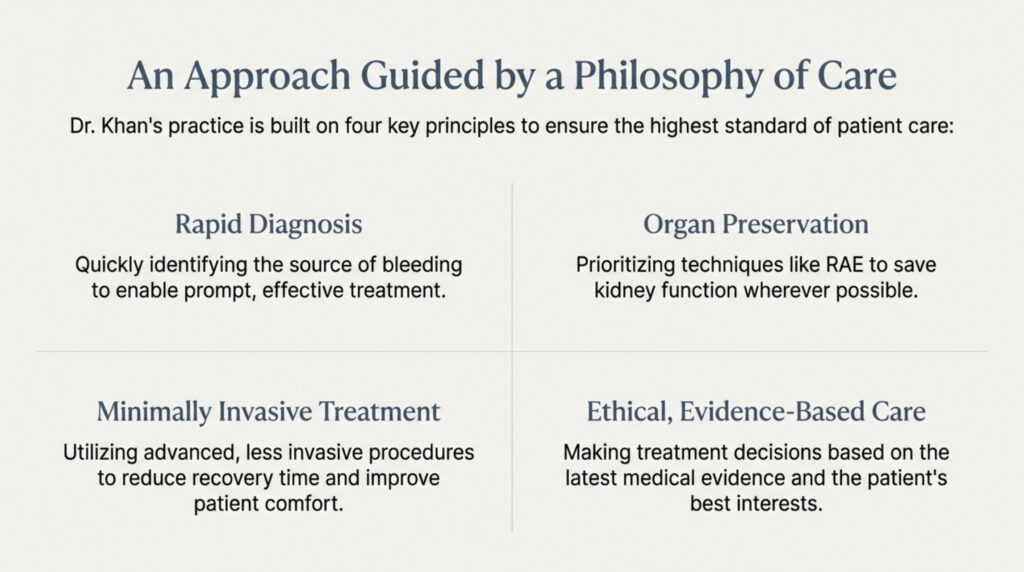
His approach focuses on:
Rapid diagnosis
Organ preservation
Minimally invasive treatment
Ethical, evidence-based care
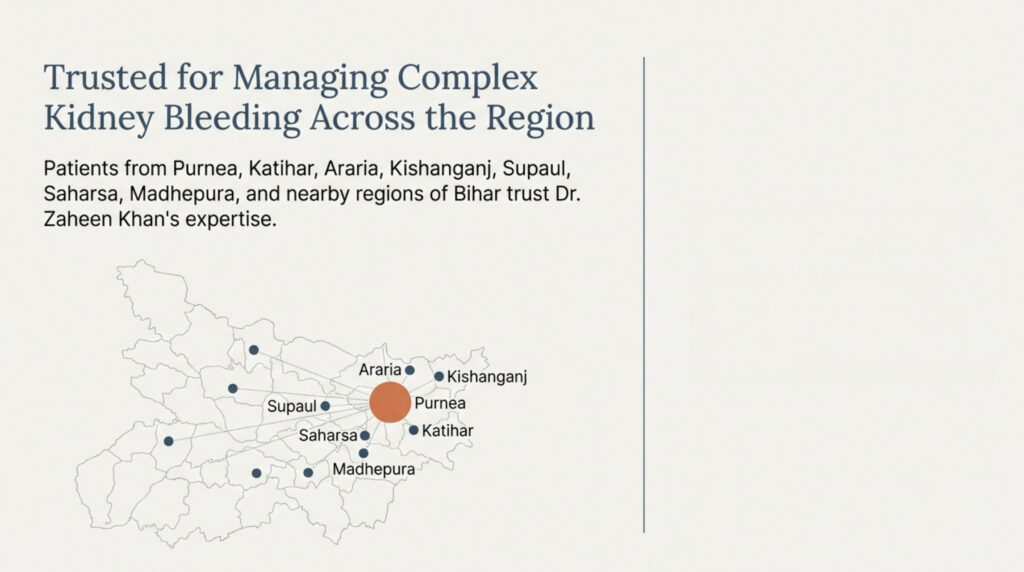
Patients from Purnea, Katihar, Araria, Kishanganj, Supaul, Saharsa, Madhepura, and nearby regions of Bihar trust him for managing complex kidney bleeding cases.