Minimally Invasive Image-Guided Treatment in Urology – Dr. Zaheen Khan
Interventional Radiology
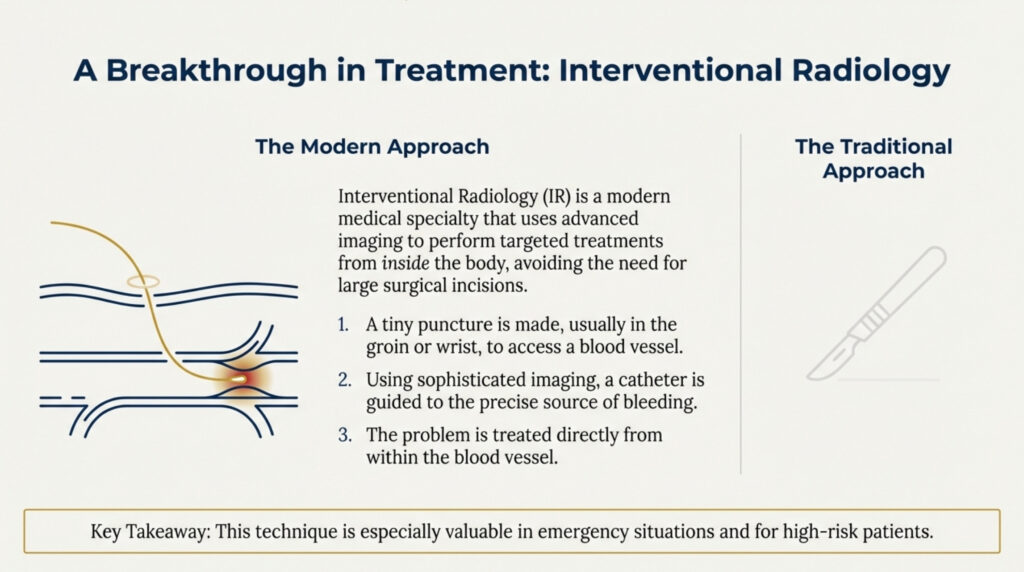
Interventional Radiology (IR) is a highly advanced, minimally invasive medical specialty that uses real-time imaging guidance to diagnose and treat complex conditions without the need for major surgery. At Urology and Kidney Institute & Maternity Centre, Purnea, Dr. Zaheen Khan integrates interventional radiology techniques into urology to manage kidney bleeding, hematuria, vascular complications, and urological emergencies with precision and safety.
This approach allows targeted treatment while preserving kidney function and reducing surgical risk.
What Is Interventional Radiology in Urology?
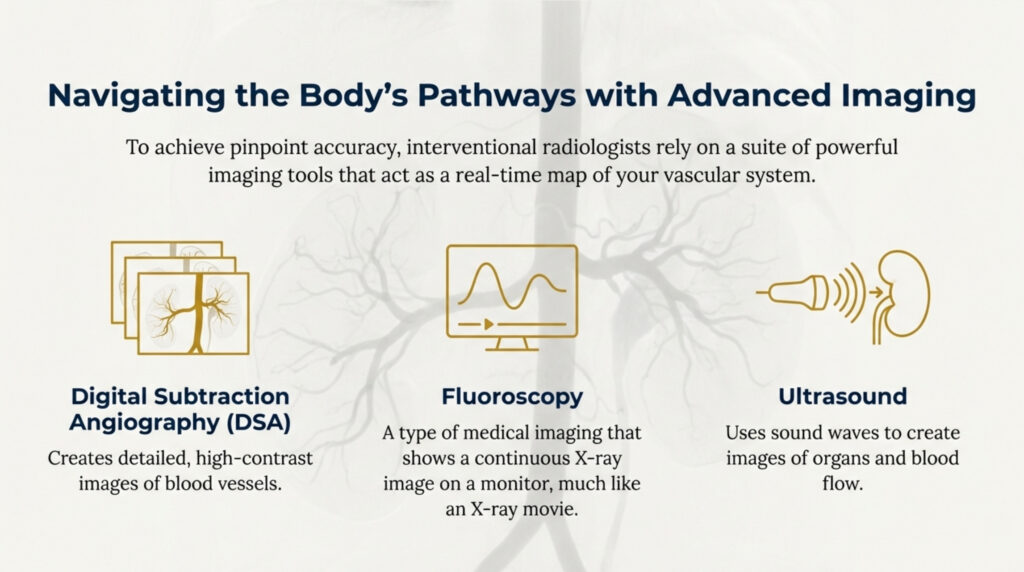
Interventional radiology in urology involves using imaging tools such as:
Digital Subtraction Angiography (DSA)
Fluoroscopy
Ultrasound
to access blood vessels through a tiny puncture, usually in the groin or wrist. Through this access, the exact source of bleeding or vascular abnormality is identified and treated from inside the blood vessel.
This technique avoids open surgery and is especially valuable in emergency and high-risk cases.
Urological Conditions Treated with Interventional Radiology
Renal Artery Embolization (RAE)
One of the most important procedures in urological interventional radiology.
RAE is used to treat:
Severe blood in urine (hematuria)
Bleeding after PCNL, RIRS, or kidney surgery
Bleeding due to kidney tumors
Renal trauma
The bleeding vessel is identified using angiography and sealed using:
Metallic coils
Liquid embolic agents (glue)
Gel or temporary embolizing agents
This stops bleeding effectively while saving healthy kidney tissue.
Interventional radiology allows precise identification and treatment without repeat surgery.
Tumor-Related Bleeding
Kidney and bladder tumors can cause persistent hematuria. Interventional radiology helps control bleeding and stabilize patients before or alongside surgical or oncological treatment.
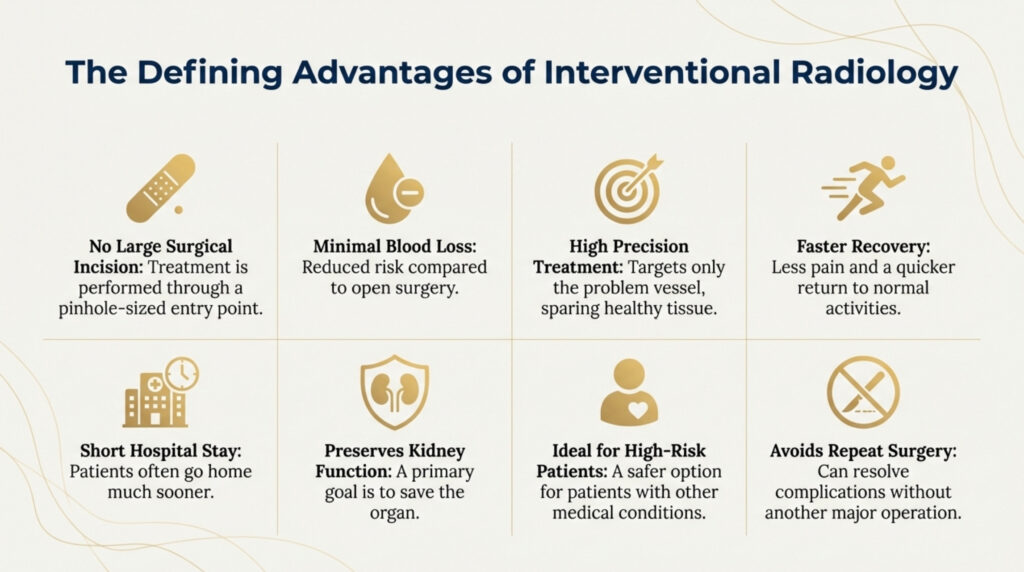
Advantages of Interventional Radiology
No large surgical incision
Minimal blood loss
High precision treatment
Faster recovery
Short hospital stay
Ideal for high-risk and emergency patients
Preserves kidney function
For many patients, IR avoids the need for kidney removal or repeat open surgery.
When Is Interventional Radiology Required?
You may need interventional radiology if you have:
Persistent or severe blood in urine
Sudden bleeding after kidney stone surgery
Drop in hemoglobin levels
Bleeding kidney tumor
Vascular complications after urological procedures
Early referral can be life-saving and kidney-saving.
Why Choose Dr. Zaheen Khan for Interventional Radiology in Purnea?
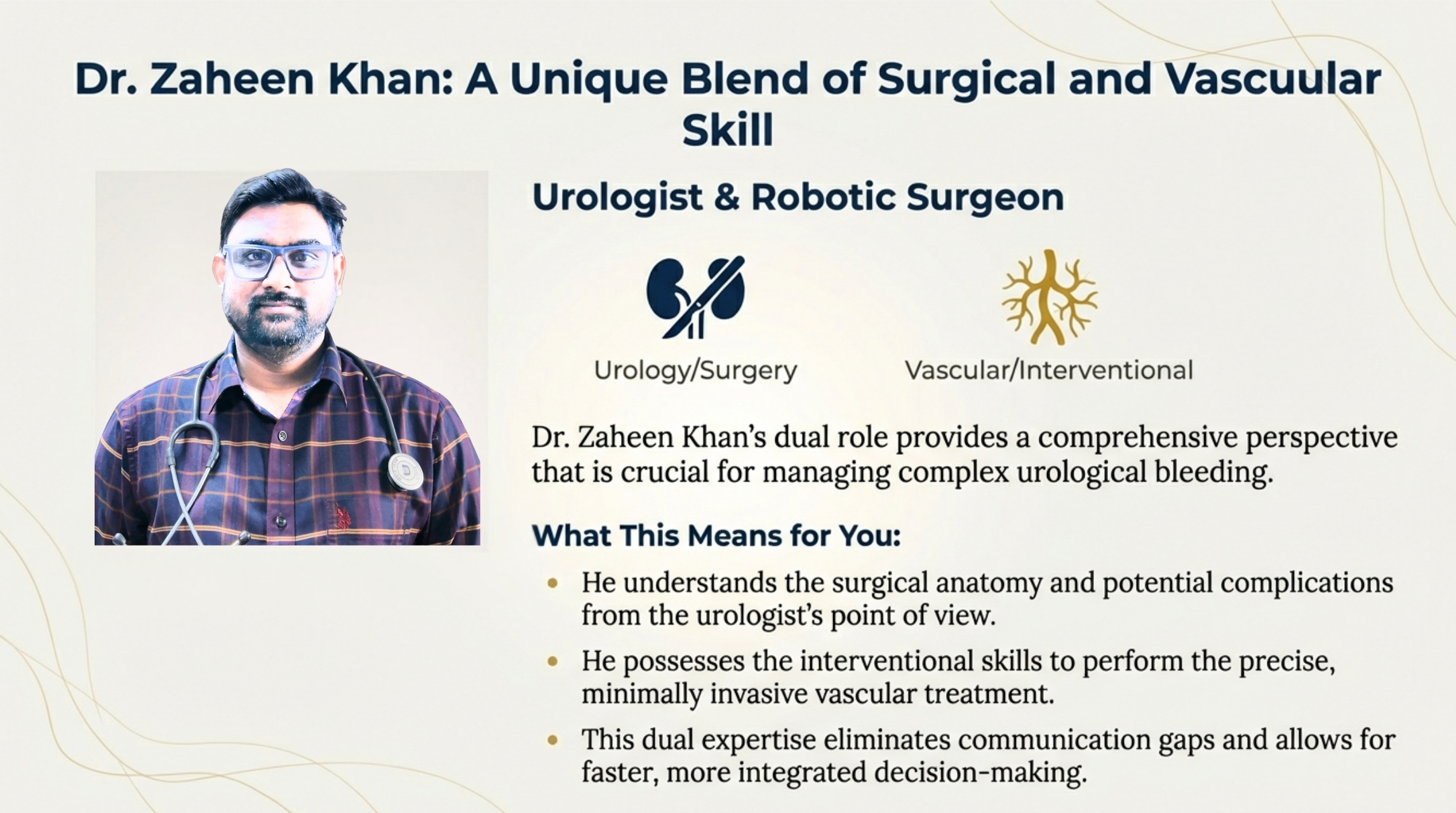
Dr. Zaheen Khan, as a Urologist & Robotic Surgeon, understands both the surgical and vascular aspects of urological diseases. This allows seamless coordination between urology and interventional radiology for optimal outcomes.
His approach focuses on:
Rapid diagnosis
Organ preservation
Minimal invasiveness
Evidence-based decision making
Patients from Purnea, Katihar, Araria, Kishanganj, Supaul, Saharsa, and Madhepura trust his expertise for managing complex urological bleeding and vascular complications.