Recovery After Robotic Urology Surgery: What Patients Should Expect: Dr. Zaheen Khan, Urologist and Robotic Surgeon
Robotic urological surgery has transformed the way kidney and prostate diseases are treated. Compared to traditional open surgery, robotic procedures are minimally invasive, more precise, and associated with faster recovery.
However, one of the most common questions patients ask before surgery is:
“How long will recovery take and what will I feel after the operation?”
According to Dr. Zaheen Khan, Urologist & Robotic Surgeon, recovery after robotic surgery is usually smoother than patients expect — but understanding each stage helps patients heal faster and avoid complications.
This guide explains what patients should realistically expect after robotic urology surgery.
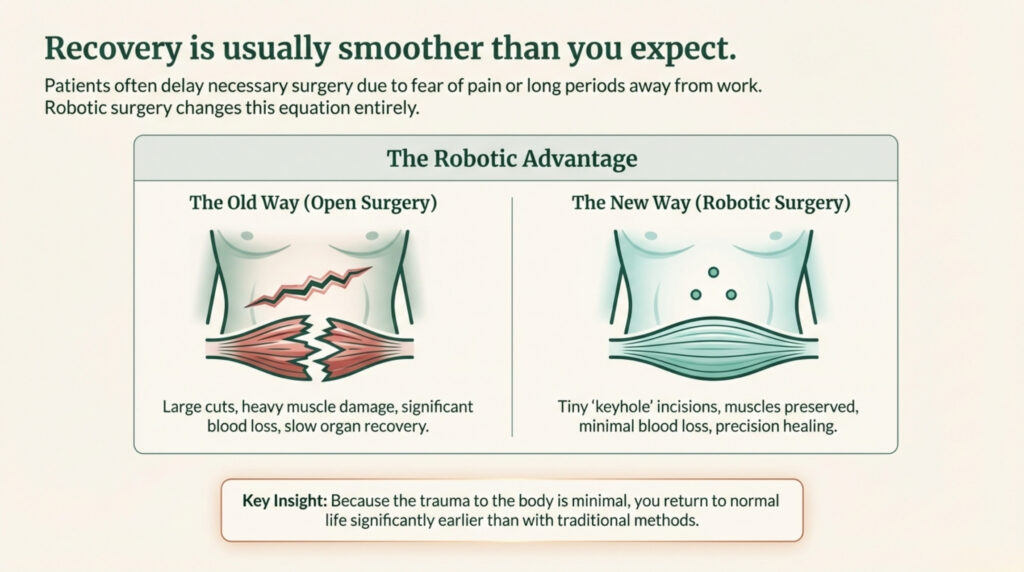
Why Recovery Is Faster in Robotic Surgery?
In robotic surgery, the surgeon operates through very small keyhole incisions instead of a large cut. Because of this:
Muscles are not heavily damaged
Blood loss is minimal
Pain is significantly less
Organs recover faster
This is why robotic procedures like robotic prostatectomy, robotic partial nephrectomy, and robotic reconstructive surgeries allow patients to return to normal life much earlier than open surgery.
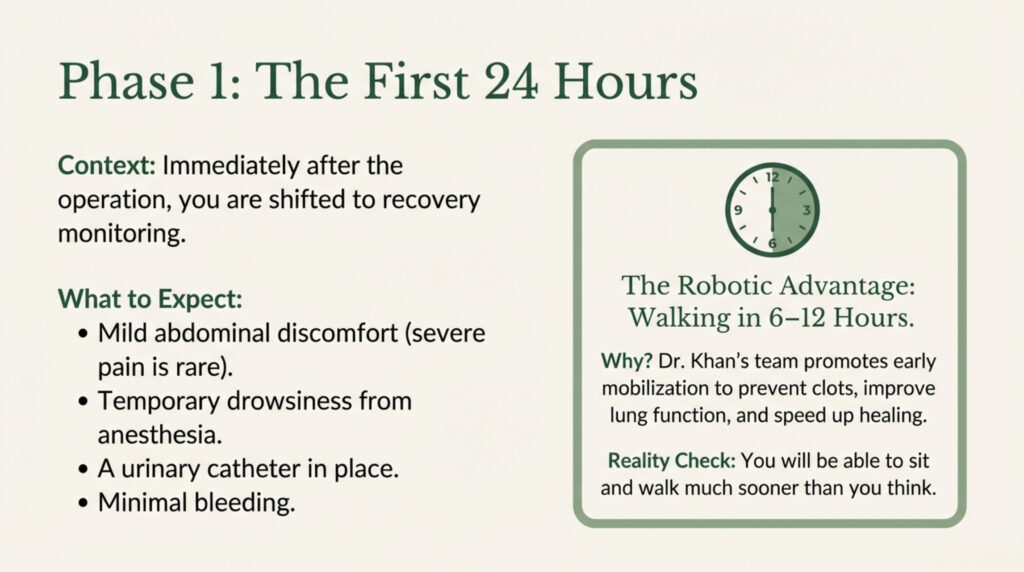
Immediately After Surgery (First 24 Hours)
After the operation, patients are shifted to recovery monitoring.
Most patients experience:
Mild abdominal discomfort
Temporary drowsiness from anesthesia
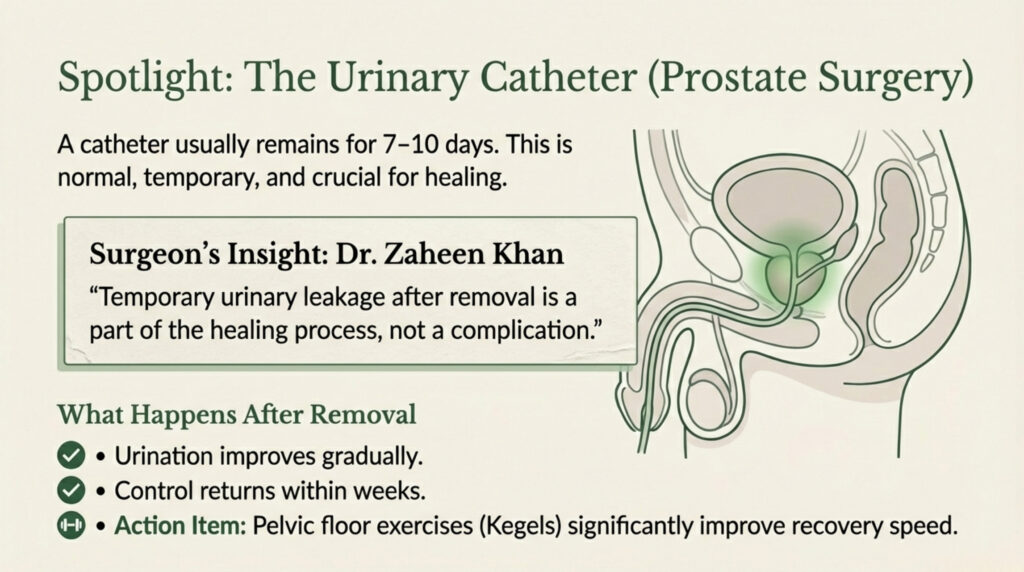
A urinary catheter in place
Minimal bleeding
In many cases, patients are able to sit and even walk within 6–12 hours after surgery.
Early movement is encouraged because it:
Prevents clots
Improves lung function
Speeds healing
Dr. Zaheen Khan’s team usually promotes early mobilization to enhance recovery outcomes.
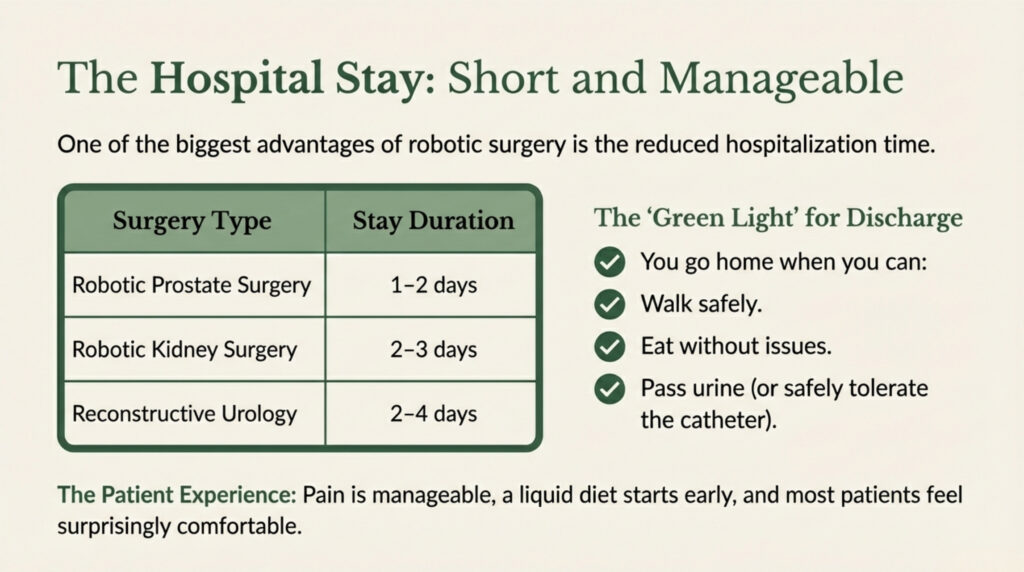
Hospital Stay (1–3 Days)
One of the biggest advantages of robotic urology surgery is shorter hospitalization.
Typical hospital stay:
Surgery Type
Stay Duration
Robotic Prostate Surgery
1–2 days
Robotic Kidney Surgery
2–3 days
Reconstructive Urology
2–4 days
During this period:
Pain is mild and manageable
Liquid diet starts early
Walking is encouraged
Most patients feel surprisingly comfortable
Patients are discharged once they can walk, eat, and pass urine safely (or with catheter support).
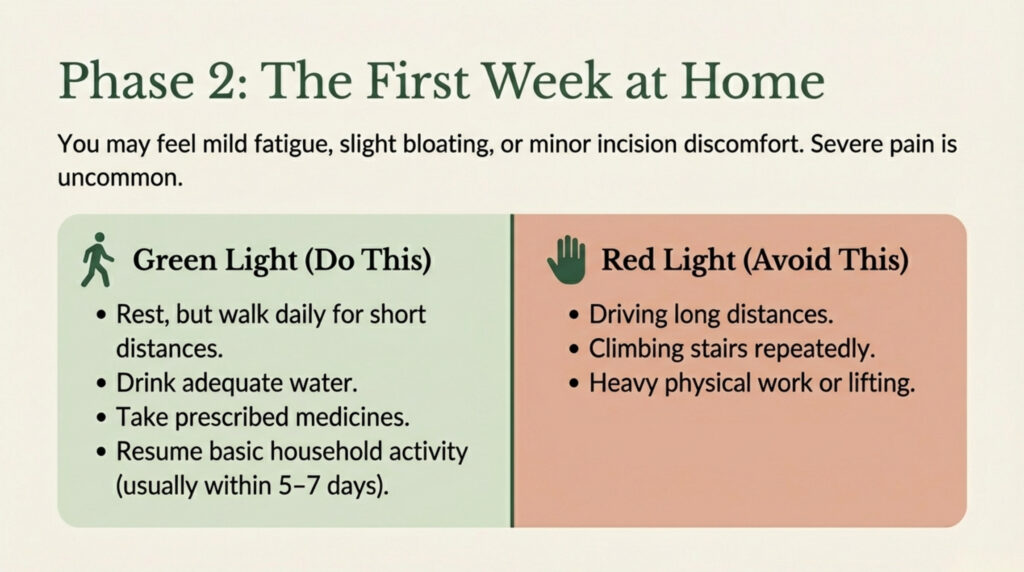
First Week After Discharge
The first week is mainly about rest and gentle recovery.
Patients may notice:
Mild fatigue
Slight bloating
Minor incision discomfort
Slow movements
But importantly — severe pain is uncommon.
Patients Should:
✔ Walk daily (short distances) ✔ Drink adequate water ✔ Avoid heavy lifting ✔ Take prescribed medicines
Patients Should Avoid:
✖ Driving long distances ✖ Climbing stairs repeatedly ✖ Heavy physical work
Most patients can resume basic household activity within 5–7 days.
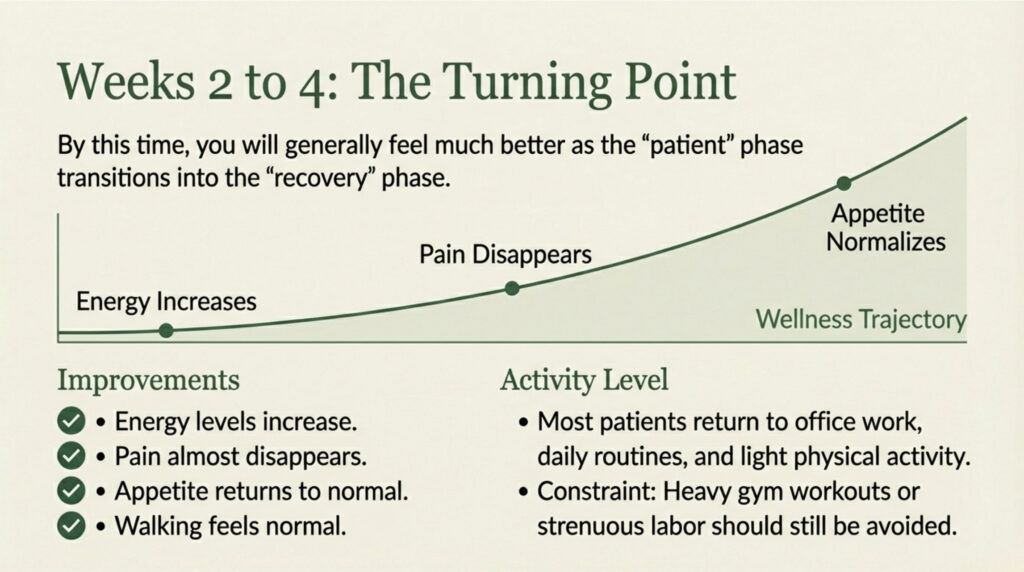
By this time, patients generally feel much better.
Improvements Seen:
Energy levels increase
Walking becomes normal
Pain almost disappears
Appetite improves
Patients usually return to:
Office work
Daily routine
Light physical activity
Heavy gym or strenuous work should still be avoided.
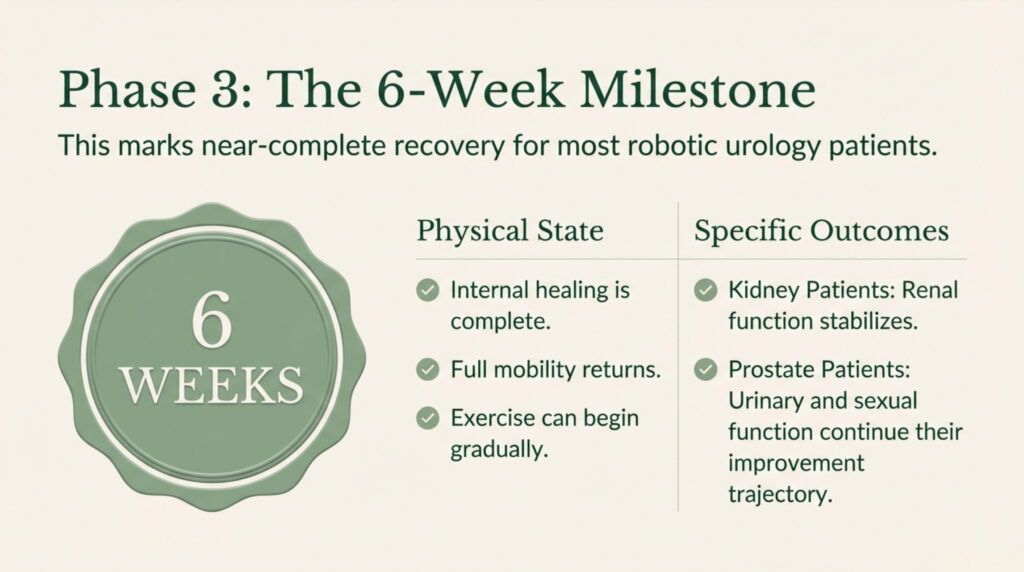
6 Weeks After Surgery
This marks near-complete recovery for most robotic urology patients.
At this stage:
Full mobility returns
Exercise can begin gradually
Urine control improves significantly
Internal healing completes
For kidney surgery patients, renal function stabilizes. For prostate patients, urinary and sexual function continue improving over months.
Long-Term Recovery Expectations
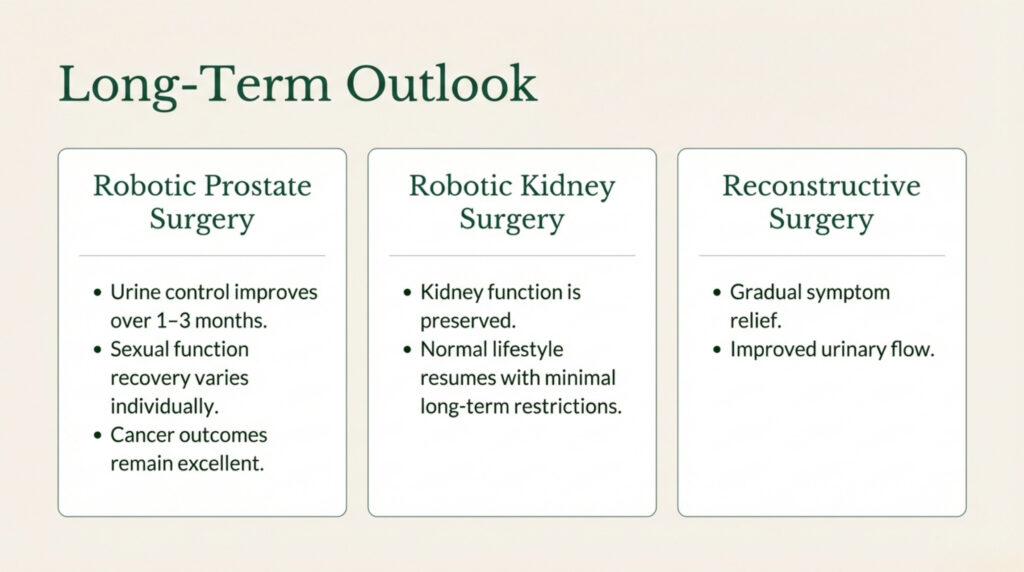
After Robotic Prostate Surgery
Urine control improves over 1–3 months
Sexual function recovery varies individually
Cancer outcomes remain excellent
After Robotic Kidney Surgery
Kidney function preserved
Normal lifestyle resumes
Minimal long-term restrictions
After Reconstructive Surgery
Gradual symptom relief
Improved urinary flow
Warning Signs Patients Should Not Ignore
Though complications are rare, patients must contact their doctor if they notice:
Fever
Increasing pain
Persistent vomiting
Heavy bleeding
No urine output
Early consultation prevents problems.
Why Robotic Surgery Benefits Patients in Bihar
Many patients in Bihar delay surgery due to fear of pain and long recovery associated with traditional open operations.
Robotic urology changes this completely.
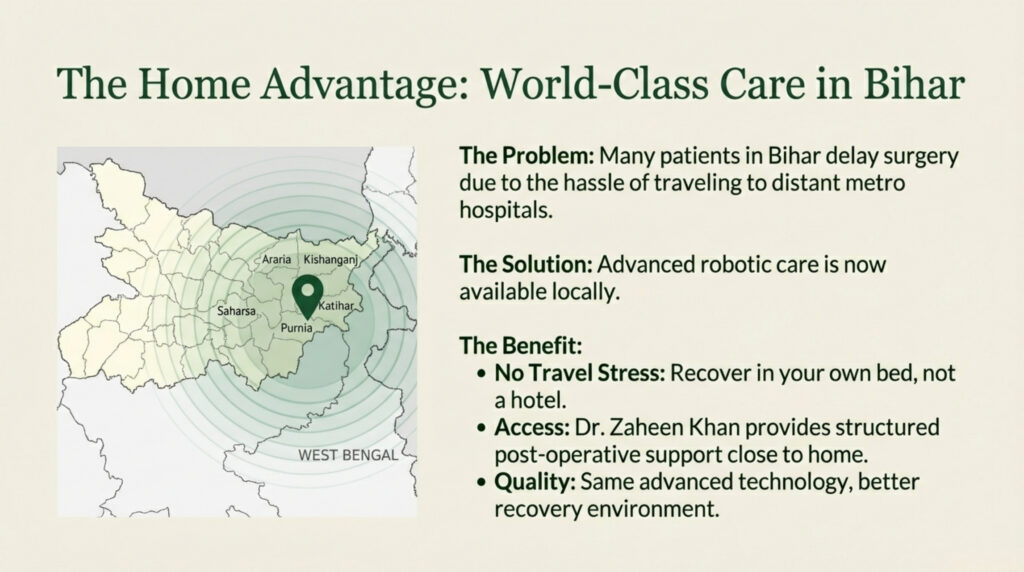
Because recovery is quick, patients no longer need to travel to distant metro hospitals for advanced care.
Patients from Purnia, Katihar, Araria, Kishanganj, Saharsa, Supaul, and nearby West Bengal districts can now undergo advanced robotic urological surgery locally.
Dr. Zaheen Khan provides modern minimally invasive treatment options allowing patients to recover faster and safely return to normal life.
People searching online for:
robotic prostate surgery recovery time in Bihar
kidney tumor robotic surgery near me
best urologist in Purnia
can now access advanced care within the region.
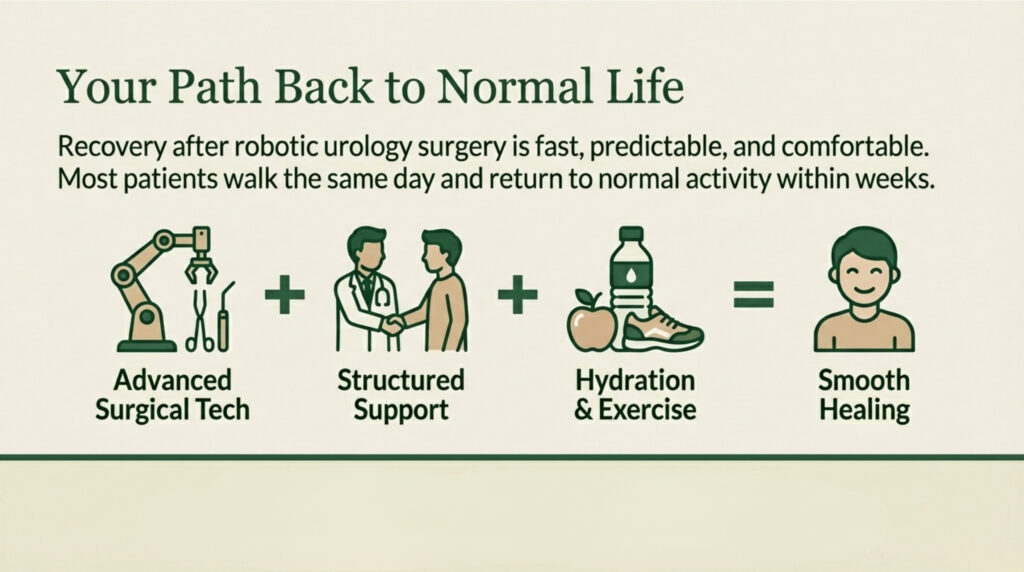
Recovery after robotic urology surgery is significantly faster and more comfortable than traditional surgery. Most patients walk the same day, go home within a few days, and return to normal activity within weeks.
With proper guidance, hydration, and exercises, healing becomes smooth and predictable.
Under experienced specialists like Dr. Zaheen Khan, patients not only receive advanced surgical care but also structured post-operative recovery support — which plays a major role in long-term success.