Robotic Simple Prostatectomy in Purnea, Bihar – Advanced Surgery for Enlarged Prostate by Dr. Zaheen Khan, Urologist and Robotic Surgeon
Advanced Robotic Surgery for Severe Enlarged Prostate (BPH)
What is Robot Assisted Radical Prostatectomy?
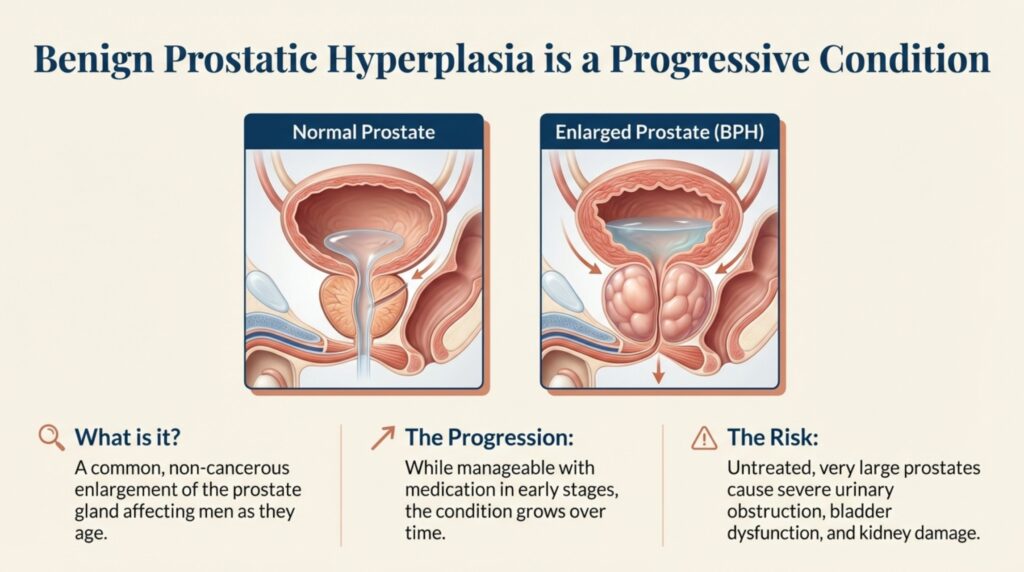
Benign Prostatic Hyperplasia (BPH), commonly known as enlarged prostate, is a progressive condition affecting a large number of men as they age. While early-stage prostate enlargement can often be managed with medications, very large prostates can cause severe urinary obstruction, recurrent urine retention, bladder dysfunction, and even kidney damage if left untreated.
Robotic Simple Prostatectomy is an advanced surgical option designed specifically for men with severely enlarged prostates who are not responding to medical treatment. Under the expertise of Dr. Zaheen Khan, Urologist & Robotic Surgeon, this procedure offers a modern, minimally invasive solution for complex prostate enlargement cases.
Understanding Robotic Simple Prostatectomy
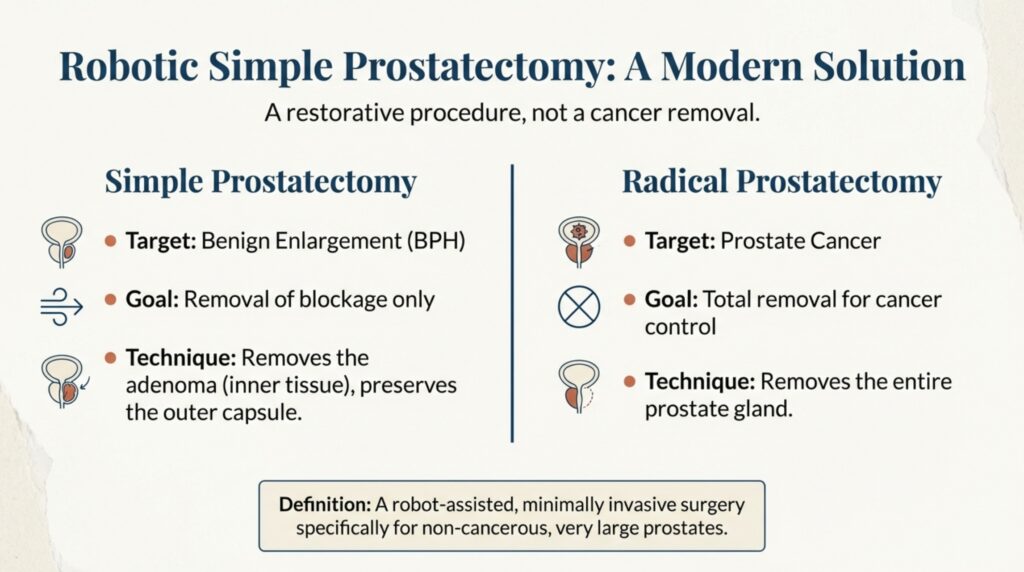
Robotic Simple Prostatectomy is a robot-assisted minimally invasive surgery performed to treat non-cancerous enlargement of the prostate (BPH). In this procedure, only the enlarged inner portion of the prostate (adenoma) that blocks urine flow is removed, while the outer prostate capsule is preserved.
It is important to distinguish this surgery from cancer-related prostate procedures:
Simple Prostatectomy → Done for benign prostate enlargement
Radical Prostatectomy → Done for prostate cancer
Robotic technology provides enhanced precision, magnified 3D vision, and improved control, making the procedure safer and more effective for selected patients.
When is Robotic Simple Prostatectomy Recommended?
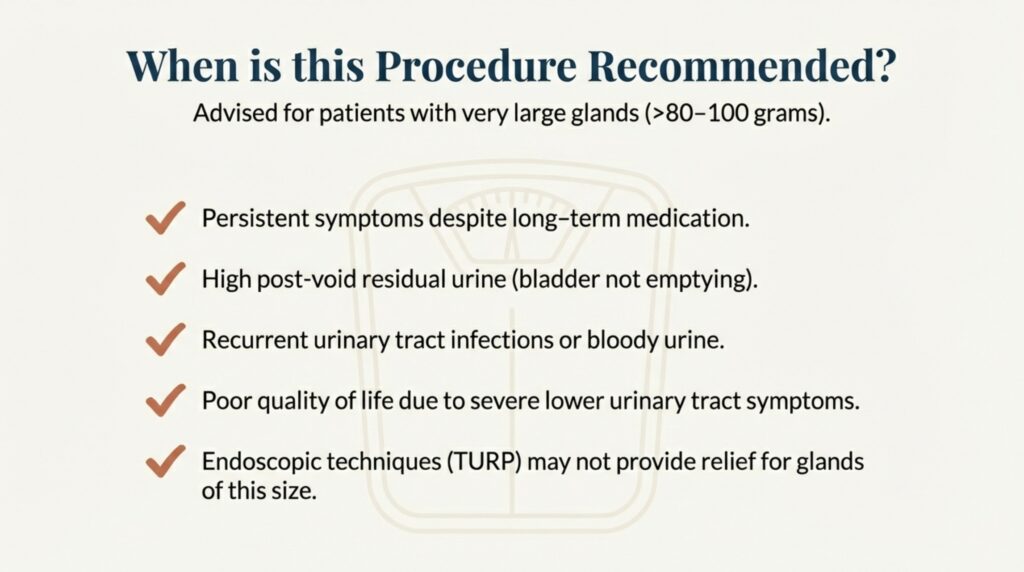
Robotic Simple Prostatectomy is usually advised in patients with very large prostate glands where other minimally invasive endoscopic techniques may not provide adequate relief.
High post-void residual urine (bladder not emptying completely)
Recurrent urinary tract infections due to obstruction
Bladder stones caused by chronic urine stagnation
Hydronephrosis (kidney swelling) or declining kidney function due to long-standing obstruction
Poor quality of life due to severe lower urinary tract symptoms
In such advanced cases, removing the obstructing prostate tissue becomes essential to protect bladder and kidney function.
Symptoms Suggesting Severe Prostate Enlargement
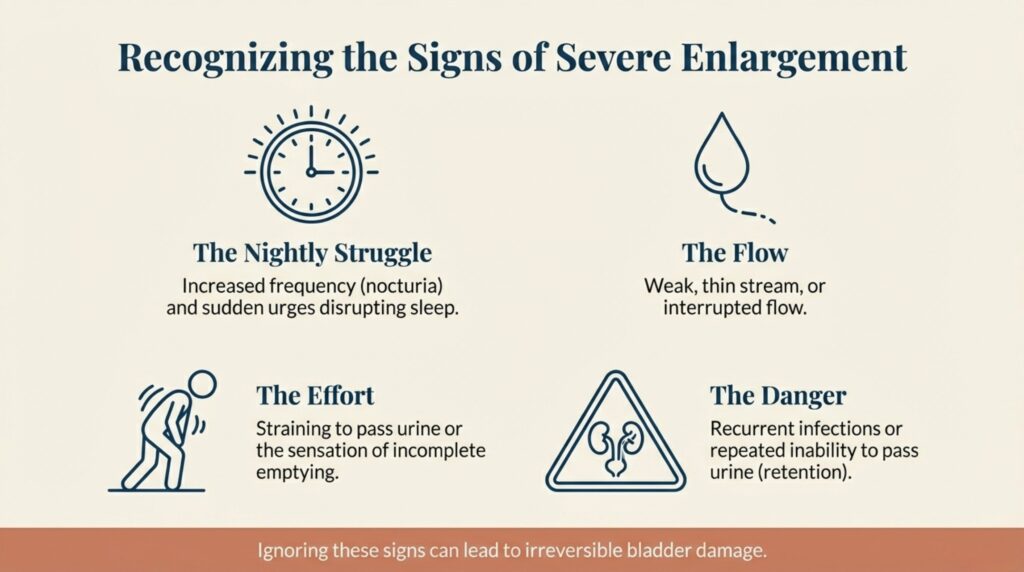
Men with advanced BPH may experience:
Weak or thin urine stream
Straining to pass urine
Interrupted urine flow
Sensation of incomplete bladder emptying
Increased urinary frequency, especially at night (nocturia)
Sudden urge to urinate
Repeated inability to pass urine (urinary retention)
Recurrent urinary infections
Ignoring these symptoms for prolonged periods can lead to irreversible bladder damage and kidney failure.
Why Robotic Simple Prostatectomy is a Modern Solution?
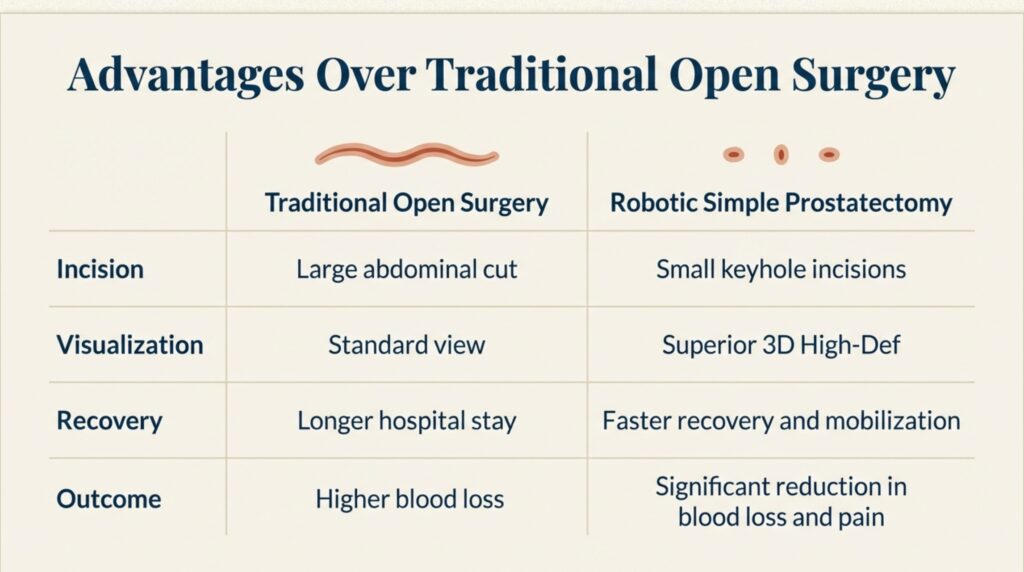
Compared to traditional open prostate surgery, robotic surgery offers several advantages when performed by an experienced robotic urologist.
Benefits include:
Minimally invasive approach with small incisions
Superior visualization using high-definition 3D camera
Reduced blood loss during surgery
Better precision while removing enlarged prostate tissue
Less post-operative pain
Faster recovery and earlier mobilization
Shorter hospital stay in most cases
Significant and long-lasting improvement in urine flow
Robotic assistance allows surgeons to work with exceptional accuracy, which is especially beneficial in very large prostates.
How the Surgery is Performed?
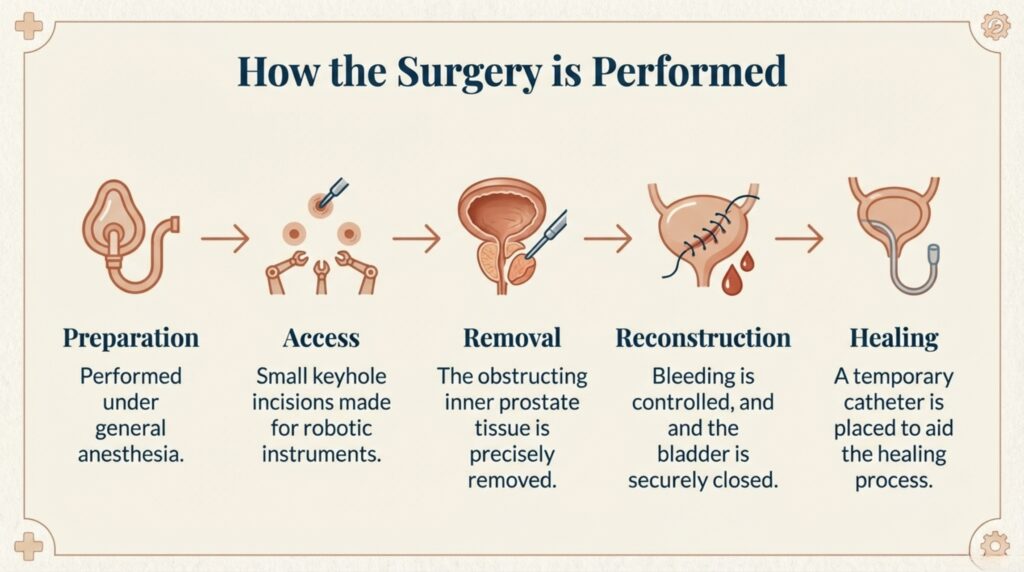
During robotic simple prostatectomy:
The procedure is performed under general anesthesia.
Small keyhole incisions are made in the abdomen.
Robotic instruments and camera are inserted.
The urinary bladder is accessed, and the enlarged inner prostate tissue causing obstruction is carefully removed.
Bleeding points are controlled precisely.
The bladder is reconstructed and closed.
A urinary catheter is placed temporarily to allow healing.
Once healing is complete, most patients experience dramatic relief in urinary symptoms.
Recovery and Post-Surgery Expectations
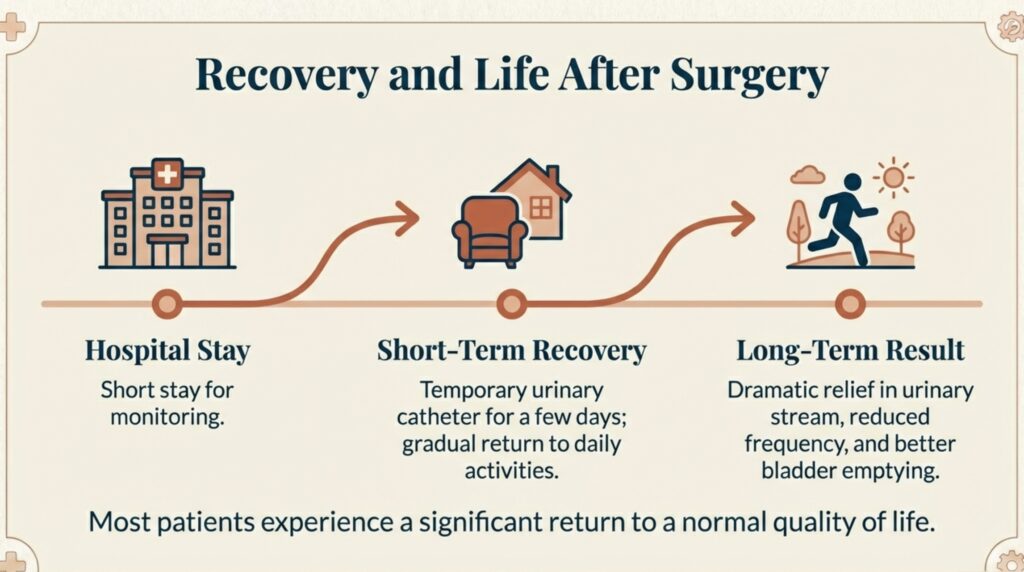
Recovery varies depending on prostate size and patient health, but typically includes:
Short hospital stay for monitoring
Temporary urinary catheter for a few days
Gradual return to daily activities
Follow-up visits for assessment of urine flow and recovery
Most patients report a marked improvement in urinary stream, reduced frequency, and better bladder emptying, significantly improving quality of life.
Possible Effects After Surgery
Patients are counseled in advance about possible outcomes:
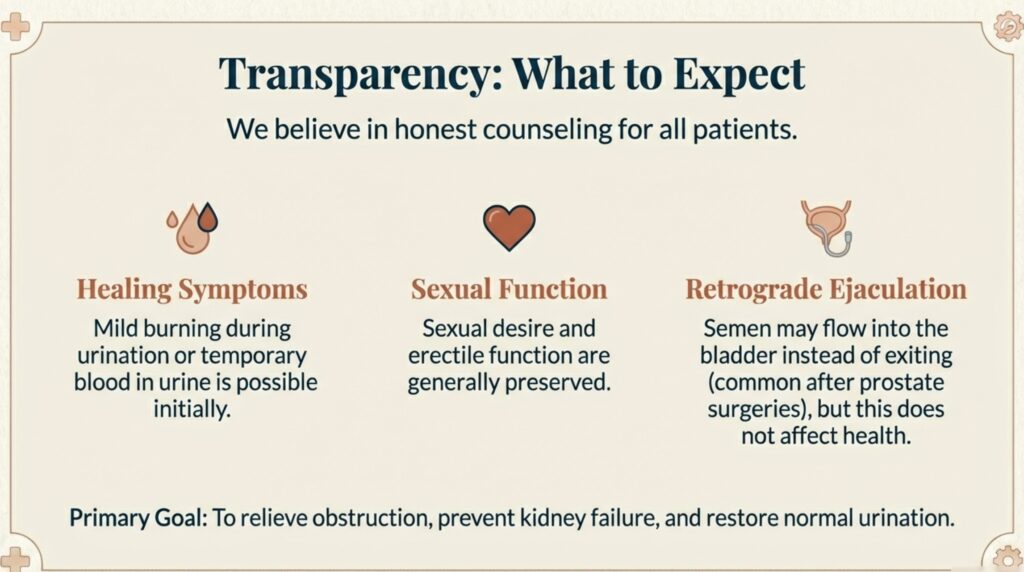
Mild burning during urination initially
Temporary blood in urine during healing
Temporary urinary leakage in some cases
Retrograde ejaculation (semen flows into the bladder instead of coming out), which is common after prostate surgeries
Sexual desire and erectile function are generally preserved, though individual outcomes vary
The primary objective of surgery is to relieve obstruction, prevent kidney damage, and restore normal urinary function.
Why Men in Bihar Are More Vulnerable to Prostate Complications?
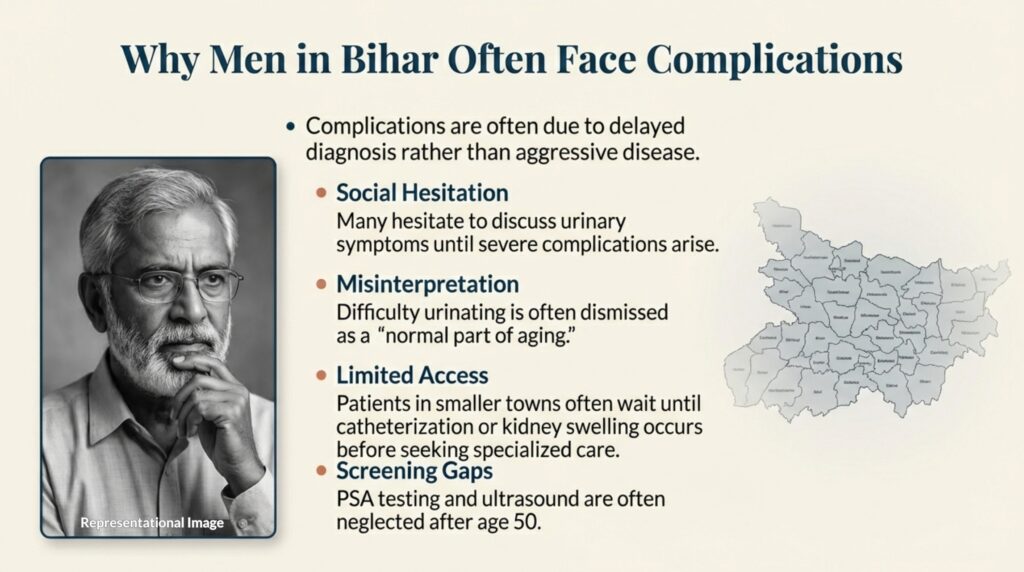
Prostate disease itself is common worldwide, but in Bihar, complications are often seen due to delayed diagnosis and treatment rather than the disease being more aggressive.
Key contributing factors include:
Lack of Early Screening
Routine prostate evaluation such as PSA testing, urine examination, and ultrasound is often not done after 50 years of age.
Social Hesitation
Many men hesitate to discuss urinary or sexual symptoms, delaying consultation until severe complications arise.
Misinterpretation of Symptoms
Urinary difficulty is frequently considered a normal part of ageing, leading to neglect of early warning signs.
Limited Access to Advanced Urology in Smaller Towns
Patients often seek specialized care only after catheterization, infections, or kidney swelling has developed.
Lifestyle and Metabolic Factors
Rising rates of diabetes, obesity, and sedentary lifestyle can worsen urinary symptoms and infections.
Early evaluation by a urologist can prevent long-term bladder damage and kidney failure.
“Many patients reach us only after prolonged obstruction has already affected the bladder or kidneys. Early prostate evaluation after the age of 50 can prevent major complications and emergency surgeries.”
Dr. Zaheen Khan
Urologist and Robotic Surgeon
Prostate Treatment Expertise in Purnea, Bihar
Patients searching for Robotic Simple Prostatectomy in Purnea, advanced prostate surgery in Bihar, or treatment for severe enlarged prostate can consult Dr. Zaheen Khan, Urologist & Robotic Surgeon, at the Urology and Kidney Institute & Maternity Centre, Line Bazar, Purnea.
Men from Purnea, Araria, Katihar, Kishanganj, Madhepura, Saharsa, Supaul, and nearby regions visit the center for comprehensive prostate evaluation, PSA testing, ultrasound KUB with prostate, and advanced surgical management of complex BPH cases.